 Guide On Map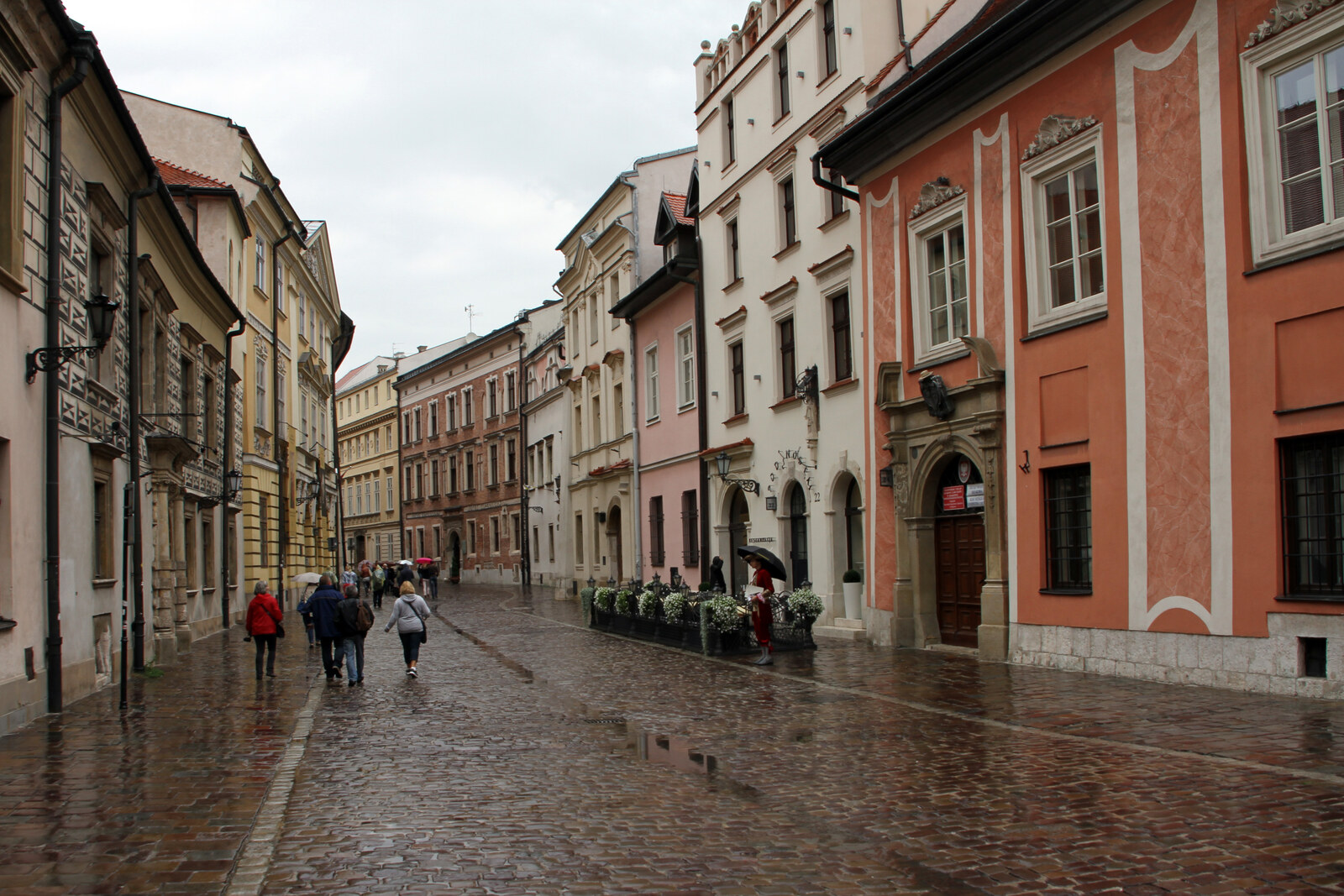
Look around first
What to notice
- The stone façade of House number 25
- The neighboring stone houses
- Where Kanonicza Street meets Wawel
The story of the place
Kanonicza Street literally means the street of the canons. This was the name for members of the cathedral chapter—a council of clergy attached to Wawel Cathedral. The chapter took part in choosing the bishop and administered church property. From the end of the fourteenth century, it housed its canons in buildings at the foot of Wawel; the street's name appeared in documents as early as fourteen oh one.
In fourteen fifty, the chapter granted House number twenty-five to the canon Jan Długosz. Długosz served as a diplomat, studied old documents, and wrote the Annals—a history of the Kingdom of Poland. This house was both his home and his study. His income came from his canonry: the church estates and tithes attached to it.
Ten years later, the Bishop of Krakow died. King Kazimierz IV Jagiellończyk wanted to give the see to his supporter Jan Gruszczyński. The Bishop of Krakow sat on the royal council, so the dispute also concerned who would take part in state decisions. After the chapter's first choice refused, Pope Pius II appointed Jakub of Sienno. Długosz recognized only him as legitimate.
Kazimierz ordered Jakub's supporters expelled and their property confiscated. In June fourteen sixty-one, Długosz left Kanonicza Street. He lost his home, his place to work, and the income provided by his office. The king then allowed two of his supporters to loot the abandoned home. Długosz spent two years living on other people's estates together with the expelled claimant to the see.
In fourteen sixty-three, the sides reached an agreement. Jakub gave up the Krakow see and later became Bishop of Włocławek. Kazimierz allowed his supporters to return and restored their incomes. The chapter gave Długosz ten grzywnas—a unit of account at the time—to repair the looted house. Four years later, the same king entrusted him with the education of his sons.
Długosz worked here on the Annals again and died in this house on May nineteenth, fourteen eighty. The stone House number twenty-five still stands where Kanonicza Street meets Wawel and bears the name of the man who was expelled from here because of the chapter's decision, then allowed back in at his own expense.
Useful on site
This street stop is freely accessible at any time.
Checked: June 16, 2026. Check the official source before visiting.Kanonicza Street remains a residential and working street. Look only into accessible passageways, and do not enter closed or private courtyards; museum spaces are visited separately.