 Guide On Map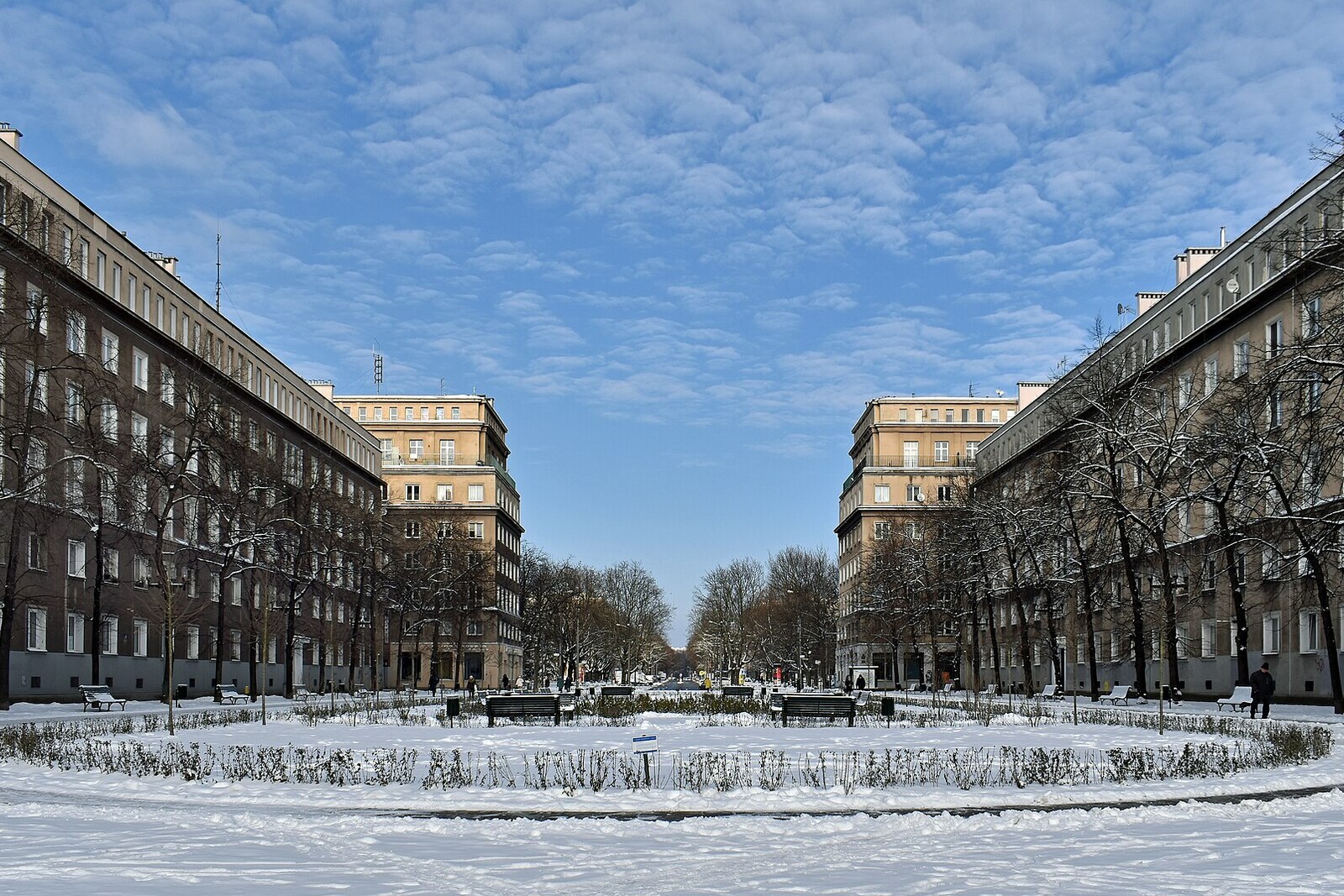
Look around first
What to notice
- Rose garden
- Stone site
- Benches
- Pedestrian vista
The story of the place
In the autumn of nineteen eighty-nine, members of the Federation of Fighting Youth came to the Avenue of Roses every Wednesday. Most were finishing school or had only just started university. They demanded the removal of the bronze Lenin that stood here, and they knew that another attempt to splash the statue with paint, set it on fire, or pull it off its pedestal would end in water cannons and tear gas.
Lenin appeared here precisely because the party leaders of Nowa Huta needed a site for official ceremonies. Previously, delegations had laid wreaths by the entrance gate of the Administrative Centre of the Lenin Steelworks. The avenue was conceived as a pedestrian route from Central Square to a town hall that was to be built at its far end. The town hall remained on the drawings, but the broad vista without tram tracks was suitable for large public celebrations.
Before the monument was erected, a rose garden with trees and benches stood between the diverging paths—the name Avenue of Roses was literal. In nineteen seventy-three, the garden was cleared and paved over. A seven-ton figure, six and a half meters high, was placed on a granite pedestal. Lenin strode toward Central Square with his hands clasped behind his back. Money for the monument came from the steelworks workers’ bonuses and thirteenth-month salaries. Red roses were planted around it, but there was nowhere left to sit among them: instead of a place for leisure, there was a site for wreaths and speeches.
Youth protests were repeated on the sixth, twenty-second, and twenty-ninth of November, and then on the sixth of December, nineteen eighty-nine. Members of parliament and former opposition activists tried to persuade the organizers to stop the clashes. The organizers set the next demonstration for the thirteenth of December and promised to return as long as the statue remained standing.
On the eighth of December, the presidium of the district council decided to dismantle the monument. Two days later, after eight in the evening, workers hooked the bronze figure to a crane, laid it on a truck, and took it to Fort Wróblowice. The demonstration announced for the thirteenth of December lost its purpose. Later, the Swedish businessman Bengt Erlandsson bought the statue and placed it in his park of curiosities near Värnamo.
The empty stone site remained for more than thirty years. In nineteen nineteen, local resident Małgorzata Szymczyk-Karnasiewicz proposed restoring greenery here through the city budget. Residents supported her project with their votes. By nineteen seventy-three, the roses had been removed here for the monument; in twenty twenty-three, one thousand two hundred sixty rose bushes were planted on the site freed from it, and benches were installed again.
Useful on site
Open urban space; access is free, but repairs, events, and weather may affect how convenient it is to pass through.
Checked: July 1, 2026. Check the official source before visiting.There is nothing to look for behind a fence or inside an interior here. Stop where you can see the entire avenue, and let the absence of the monument work together with the story.