 Guide On Map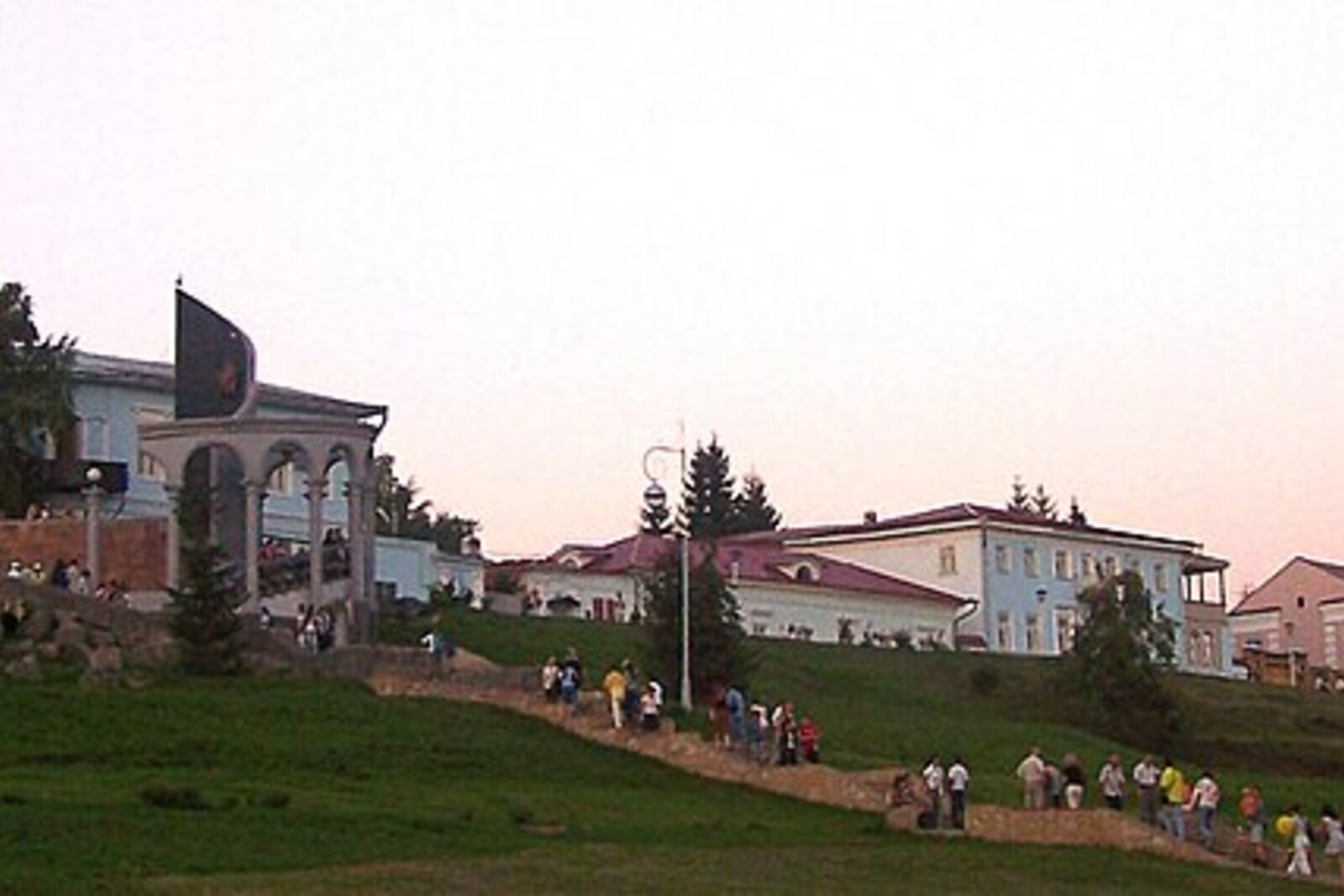
Look around first
What to notice
- Stone retaining walls
- Cast-iron fence
- Terrace above the Toyma River
The story of the place
Naberezhnaya here lies high above the Toyma River: beneath the stone houses and churches of old Yelabuga, the slope descends to the former river landings. The garden at the edge of this slope is held by stone retaining walls on three sides, while a cast-iron fence separates it from the street. Nearby, the merchants of the Stakheev family had their own promenade landing, so this stretch of riverbank was connected both with river work and with walks in the town. Stone and cast iron still define the boundary of the garden on the terrace.
In eighteen eighty-nine, the chemical manufacturer Pyotr Kapitonovich Ushkov took on a plot near Spassky Cathedral, where townspeople brought waste. Ushkov wanted to create a public garden here and paid for the work out of his own funds.
He earned his money from chemical factories in Yelabuga Uyezd. Ushkov was one of the first in Russia to establish the industrial production of sulfuric acid; he produced bleaching powder, vitriol, and chromium salts. His enterprises supplied factories in different parts of the country. The manufacturer spent no less than five thousand rubles on creating the garden.
The plot required more than clearing it and planting trees. Naberezhnaya Street runs along the upper edge of the Toyma River terrace, so the slope had to be held in place with stone walls. A cast-iron fence installed in the eighteen sixties already stood on one side. In eighteen eighty-nine, builders erected retaining walls on the other three sides, and the former dump acquired the clear boundaries of a garden for strolling.
Ushkov chose a site on the most prominent edge of old Yelabuga. Naberezhnaya was a street above the river, not a path by the water. Stone houses and churches lined it, while river landings lay lower down the slope. The neighboring plot belonged to another Yelabuga merchant family—the Stakheev family; they had their own promenade landing. This is how merchant Naberezhnaya came about: individual owners invested their own money in the land in front of their houses, while townspeople could use the gardens and descents they created.
The stone retaining walls and cast-iron fence of Ushkov's garden have survived. The official name of the protected site also retained the manufacturer's surname: “Pyotr Ushkov Garden with Retaining Walls and Cast-Iron Fence.” Where he found a dump of waste, his name now denotes an entire terrace.
Useful on site
Open urban area; access is possible during daylight hours, and the condition of the stairs depends on the weather.
Checked: date not specified. Check the official source before visiting.By the fence, stay on the landscaped platform and do not approach the slippery edge of the slope. The best view does not require entering any buildings.