 Guide On Map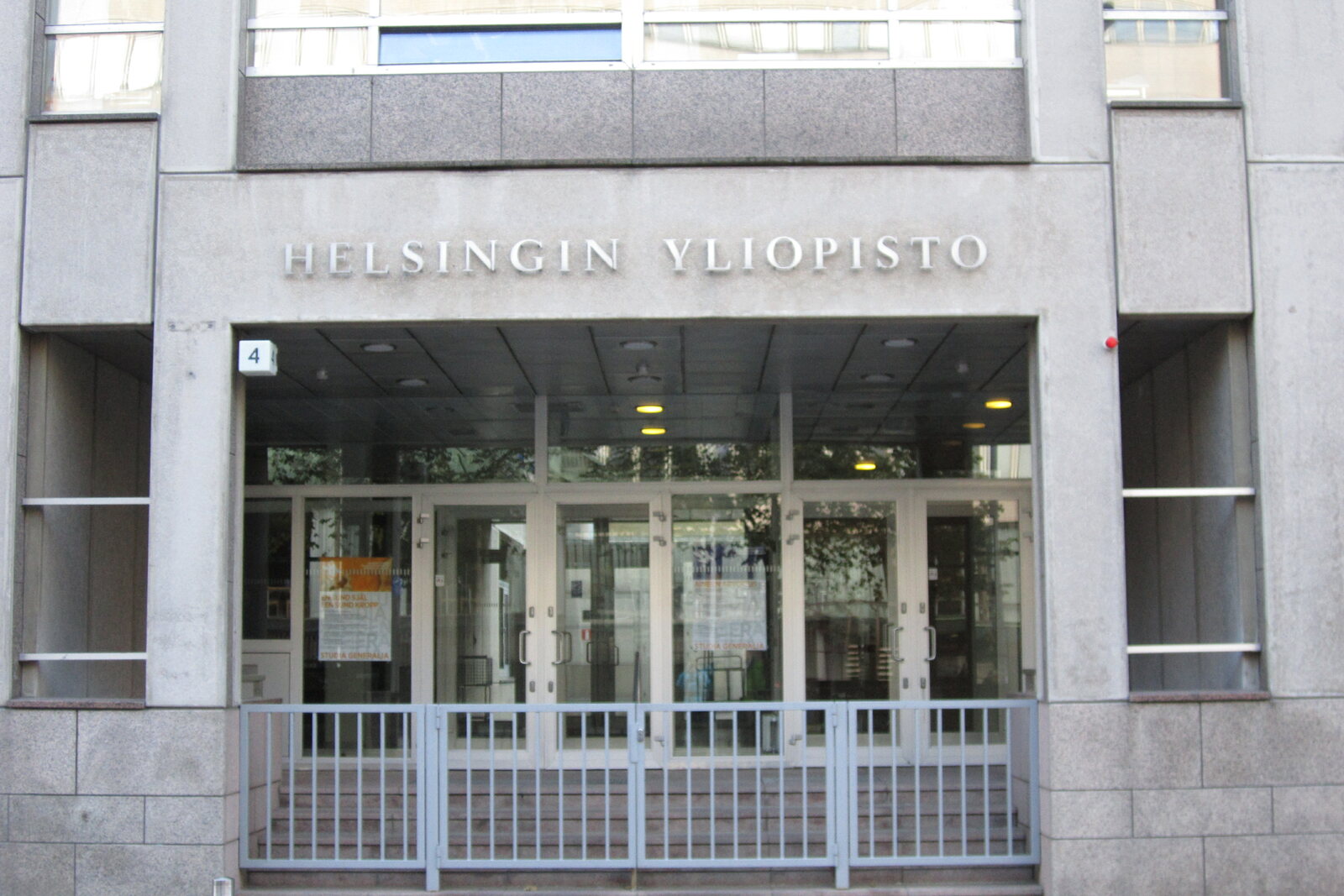
Look around first
What to notice
- Light-colored façade
- Central entrance
The story of the place
The light-colored building opposite the Government Palace is the main building of the University of Helsinki. Behind this façade are lecture halls, offices, a museum, and the Great Hall for university ceremonies and concerts.
The institution came here after a fire destroyed almost all of Turku and part of the university premises in eighteen twenty-seven. Nicholas I ordered the professors, students, library, and surviving collections moved to the new capital. In Helsinki, the institution was called the Imperial Alexander University; it received its present name in nineteen nineteen. Carl Ludvig Engel placed a semicircular Great Hall at the center of the new building. For a long time, it was the city's main concert hall.
On April twenty-eighth, eighteen ninety-two, twenty-six-year-old Jean Sibelius conducted here. The young composer was seeking his first serious recognition and hoped to marry Aino Järnefelt, but he lived on modest earnings from teaching violin and music theory. His teachers in Vienna had been dissatisfied with his early experiments for orchestra. In Helsinki, Sibelius took a subject from the Kalevala and composed Kullervo—an enormous work for orchestra, two soloists, and male choir.
The preparations exposed the full risk of the undertaking. The city orchestra's permanent roster had only thirty-eight musicians, so additional performers had to be hired. No professional choir of the necessary size could be found in Helsinki: about forty singers were assembled from the university choir and the school of church singers. The orchestra musicians spoke mainly German, while the choristers spoke Finnish and Swedish. At the first orchestral rehearsal, the musicians laughed after a recitative by the soloist Emmy Achté. Sibelius continued the rehearsals himself.
The Great Hall was filled to capacity for the premiere. Pale, Sibelius raised his trembling hands and conducted all five parts. The reaction was intense and mixed: some listeners heard the birth of Finnish orchestral music, while others found the composition chaotic. The concert nevertheless became Sibelius's breakthrough. He believed he would be able to support a family, and six weeks later he married Aino.
The success did not save the score itself from a long silence. After four more performances, reviews grew colder, and in the spring of eighteen ninety-three Sibelius withdrew Kullervo from the program, promising to revise the work. He did not do so and never again permitted it to be performed complete during his lifetime. The next complete performance took place only in nineteen fifty-eight, nine months after the composer's death.
That Great Hall no longer exists either. On the night of February twenty-sixth to twenty-seventh, nineteen forty-four, bombs pierced the main building, brought down the roof, and destroyed Engel's semicircular hall together with its furnishings. After the war, the architect Johan Sigfrid Sirén restored the space and enlarged it. Kullervo was first heard in this location, but behind the façade there is now a different Great Hall.
Useful on site
The Great Hall and the stories connected with it cannot be seen from the street; do not count on free entry to the university building.