 Guide On Map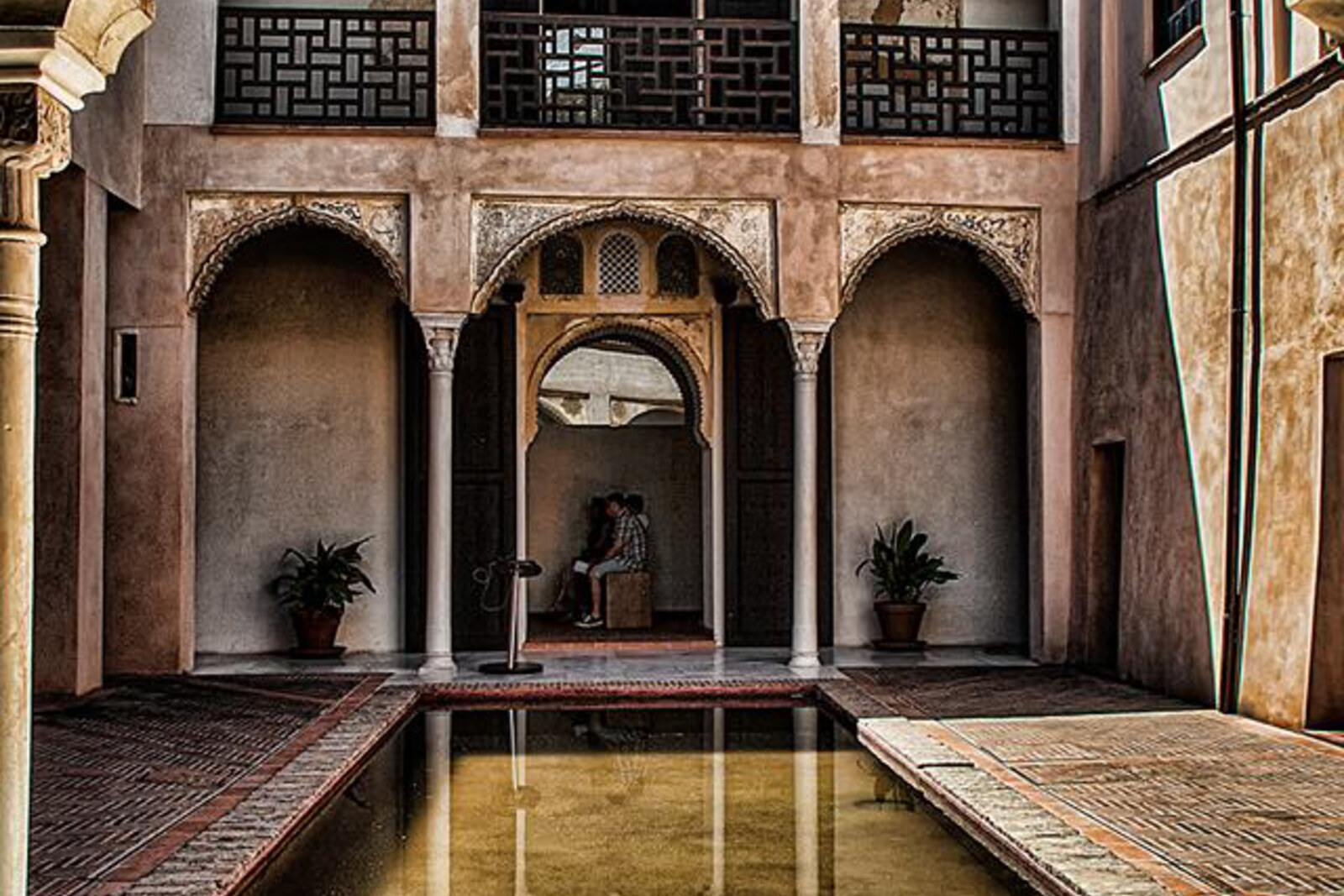
Look around first
What to notice
- Rectangular courtyard
- Pool
- Carved arches
- Fragments of Nasrid painting
The story of the place
The entrance here deliberately turns aside: from the street, it was impossible to look into the living rooms of the wealthy Nasrid house built in the fourteenth century. The main rooms are arranged around a rectangular courtyard with a pool, while the carved arches and remnants of painting preserve the memory of its first, unnamed owners. Later, the old building was incorporated into the convent grounds, preserved in the northwestern corner among new galleries made from dismantled houses. After the city bought it in the middle of the twentieth century, the Albaicín History Center was established here.
In fifteen oh one, Queen Isabella I of Castile changed the plans of her secretary, Hernando de Zafra. He intended to found a Dominican convent for women in Alcazaba Qadima—the old fortified part of Albaicín. The queen reserved that site for her own Convent of Santa Isabel la Real and gave Zafra, in exchange, properties lower down the slope, near the Darro River. This house was among them.
Hernando came from a family without a noble title and made his fortune in royal service. During the war for Granada, he handled the army's supplies and negotiations over the surrender, and after the city's fall he took part in its administration. He received land, houses, and the title of Lord of Castril for this work. That is why the future convent was moved here: Casa de Zafra was part of the Crown's settlement with its official.
The building itself had appeared as early as the fourteenth century. The names of its Nasrid owners are unknown, but its size and decoration point to a wealthy family. The dwelling faced inward: the bent entrance did not allow the rooms to be seen from the street, while the main rooms were arranged around a rectangular courtyard with a pool. The Zafra surname belongs to its later Christian owner.
Hernando did not live to build the convent he had planned. In his will of fifteen oh seven, he assigned it revenues and entrusted its foundation to his wife, Leonor de Torres. After his death, Leonor continued the work; then the family's heir, Fernando Sánchez de Zafra, officially transferred these houses to the Dominican nuns. By fifteen forty, the Convent of Santa Catalina de Zafra was complete. Its church inscription names Hernando and Leonor as founders, and the convent itself acquired the customary name of Convent of Santa Catalina de Zafra.
The builders dismantled part of the former Muslim houses and used their columns and capitals in the new galleries. Casa de Zafra remained in the northwestern corner of the convent grounds as a separate old building. In nineteen forty-six, the city council, under Mayor Antonio Gallego Burín, bought the dilapidated house from the convent and separated it from the rest of the complex.
It now houses the Albaicín History Center. The courtyard, pool, carved arches, and fragments of Nasrid painting belong to the unnamed family that lived here before the conquest; the name at the entrance was left by the people who received the house in exchange for another site and turned it into part of the convent's legacy.
Useful on site
15 October — 14 March: Tuesday—Saturday 10:00—14:00 and 16:00—19:00, Sunday 10:00—14:00, Monday closed. 15 March — 14 October: Tuesday—Saturday 9:30—13:30 and 17:00—20:00, Sunday 9:30—13:30, Monday closed. 25 December, 1 and 6 January closed; 24 and 31 December closed after noon.
Checked: June 29, 2026. Check the official source before visiting.A full visit is possible only when the interior is open; access is checked separately. Keep quiet near the entrance: ordinary homes surround it.