 Guide On Map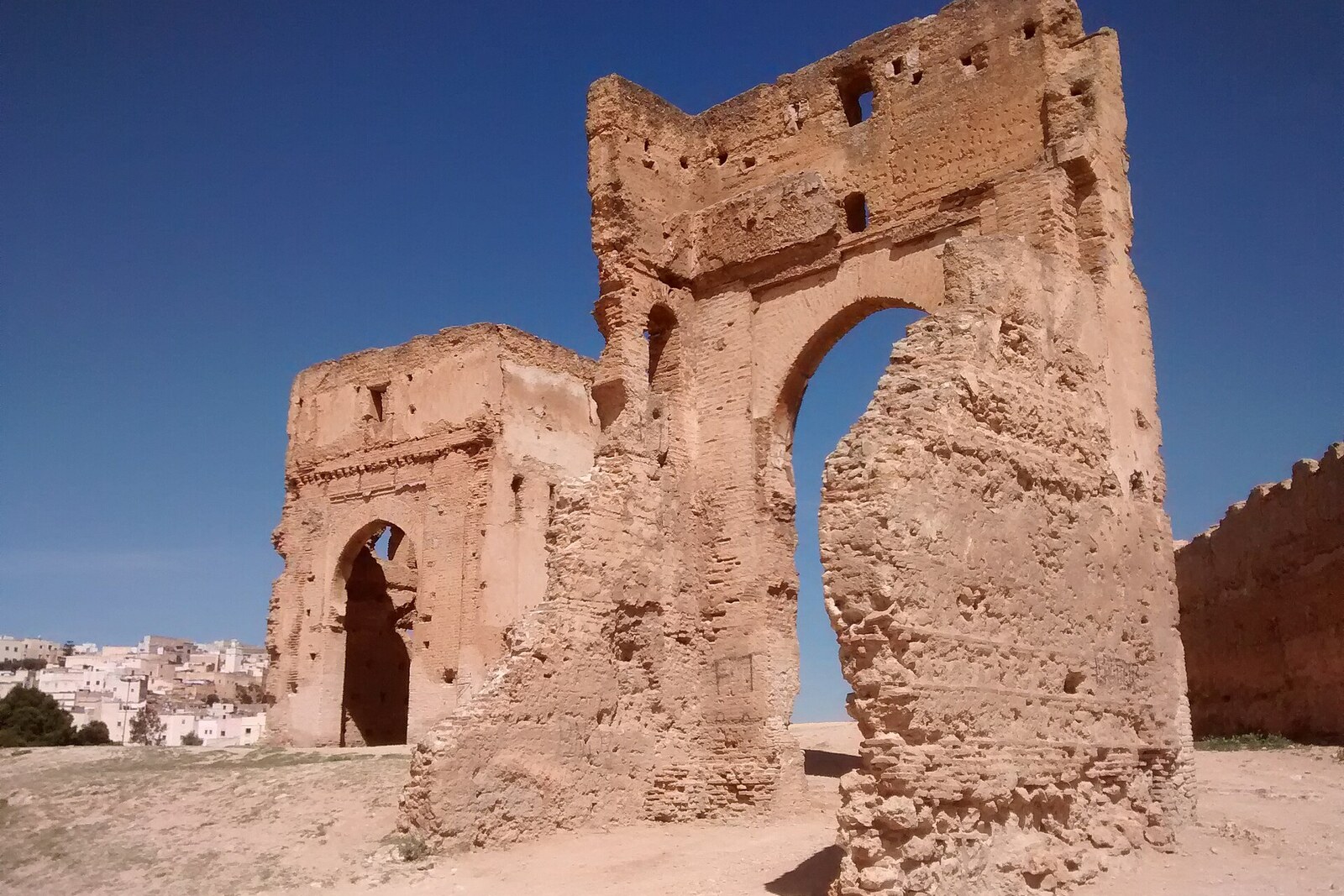
Look around first
What to notice
- Two rectangular chambers
- Horseshoe arches
- Exposed walls
- Fragments of carved stucco
The story of the place
At the summit of al-Qula, two tall rectangular chambers with horseshoe arches form the Marinid royal cemetery. They were once covered by wooden pyramidal roofs with green tiles, and colored marble epitaphs stood inside; now only fragments of carved stucco remain above the exposed walls. The hill was part of a fortified Marinid residence. Excavations changed the understanding of one of its buildings: archaeologists identified the structure once thought to be a mosque as an official residential and ceremonial building with a strictly symmetrical plan.
In the autumn of thirteen sixty-one, the body of Sultan Abu Salim Ibrahim was brought here. He became the first Marinid ruler whose burial on al-Qula hill is known from historical records. Before him, the sultans of this dynasty were buried at Chellah near Rabat, while his predecessor Abu Inan was buried beside the Great Mosque of Fes el-Jdid.
Abu Salim sought the throne after Abu Inan's death in thirteen fifty-eight. At that time, court dignitaries and military commanders replaced Marinid claimants, expecting to rule in their name. Abu Salim returned from exile on the Iberian Peninsula, secured the support of allies, and entered Fez as sultan in thirteen fifty-nine. He received the court and the treasury, but depended on the very people who had helped him take the throne. Two years later, civilian and military dignitaries rebelled. Abu Salim fled the capital, was captured and killed, and the conspirators put another Marinid in his place.
The records do not say who ordered the deposed sultan to be buried here. Yet al-Qula was not an empty hill above the city at that time. It contained a fortified residence used by the Marinids. Recent excavations even led archaeologists to reconsider the function of one of its buildings: a structure once thought to be a mosque turned out to be an official residential and ceremonial building with a strictly symmetrical plan. The dead Abu Salim was placed beside the structures of the very court that had driven him out while he was alive.
His burial determined al-Qula's later fate. In thirteen ninety-three, thirteen ninety-six, and thirteen ninety-eight, three more Marinid sultans were buried here. The last to be brought here, in fourteen sixty-five, was Abd al-Haqq II, whose death ended the dynasty's rule. The name therefore refers to the entire Marinid royal cemetery, not to a single tomb with a known occupant.
The two tall rectangular chambers were once covered by wooden pyramidal roofs with green tiles. At the beginning of the sixteenth century, colored marble epitaphs could still be seen inside; the lost roofs are visible in old photographs. Now only exposed walls, horseshoe arches, and fragments of carved stucco remain. The inscriptions do not make it possible to determine in which chamber Abu Salim lay. Two inscribed marble stelae found here were moved to Dar Batha. They belonged to Princess Zaynab and the dignitary Abu Ali al-Nasir, but to none of the sultans.
Useful on site
Free access; visit before dark.
Checked: June 22, 2026. Check the official source before visiting.Do not climb on the fragile masonry or touch the surviving decoration. For a view of the city, choose a stable spot away from the edges of the ruins.