 Guide On Map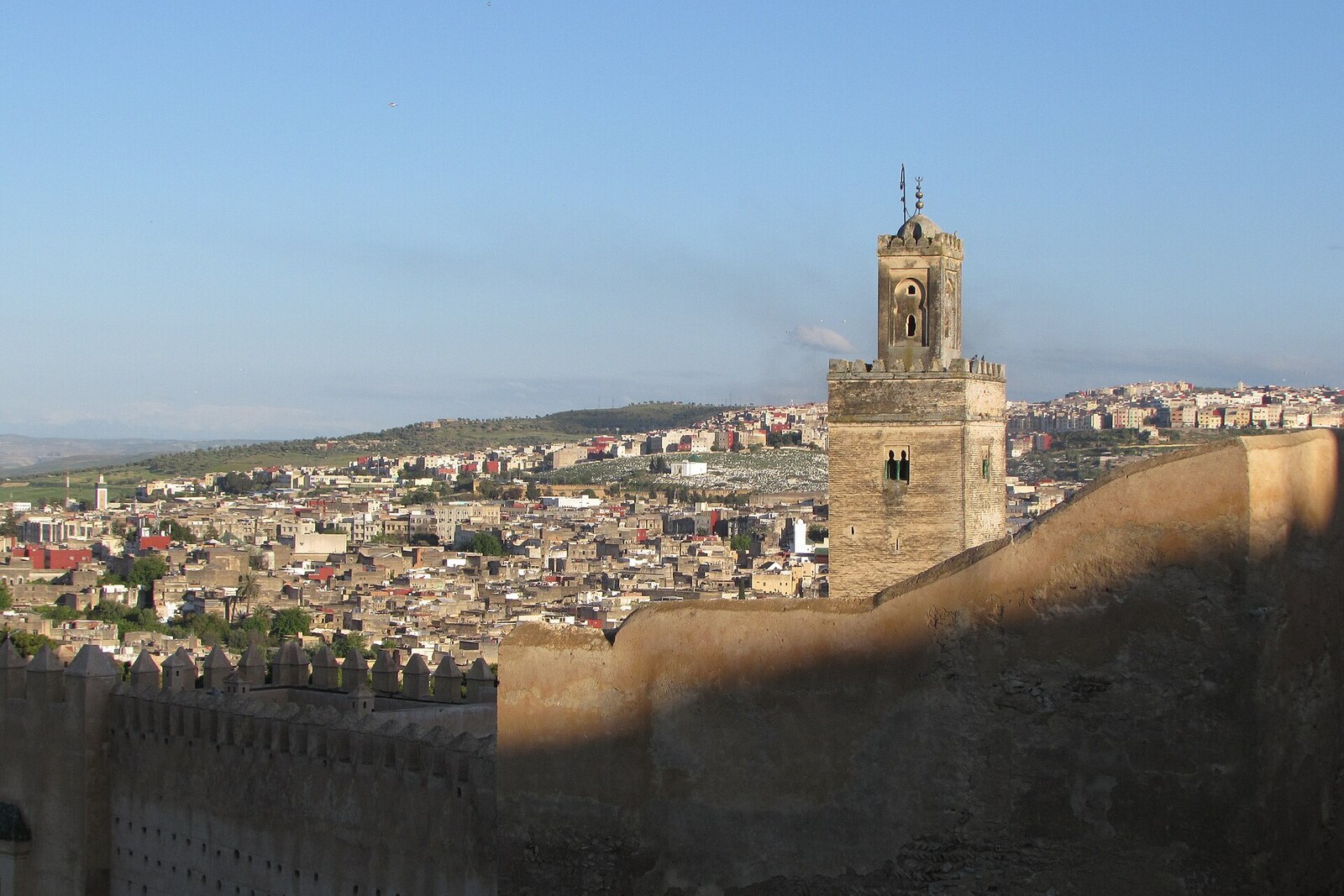
Look around first
What to notice
- Outer arch
- Inner arch
- Courtyard between the arches
- Angled passage
The story of the place
The outer and inner arches of Bab Guissa stand on different axes. Between them, the passage enters a courtyard and turns at a right angle. This route slowed people and horses: the guards had time to bolt the second set of doors while attackers found themselves inside the fortified passage. This was especially important here, at the northern edge of the medina, where the ground beyond the wall rises higher than the city quarters.
The name is translated as “the Gate of Guissa,” but Guissa is an altered personal name. 'Ajisa ibn Dunas was a Zenata prince from the Zenata tribe who ruled this part of Fez in the middle of the eleventh century. At that time, two separate cities stood on the two banks of the river. al-Aliya lay on the al-Qarawiyyin bank, and opposite it stood Madinat Fas, today’s Andalusian Quarter.
In one thousand fifty-nine, 'Ajisa’s father, the ruler Dunas ibn Hammama, died. The elder son, al-Futuh, wanted to inherit the entire principality and entrusted the al-Qarawiyyin bank to his younger brother. 'Ajisa decided to rule independently. Both brothers had inhabited quarters, markets, a court, and armed men; defeat would deprive either of them of both income and the right to their father’s inheritance.
al-Futuh fortified himself on the Andalusian bank. 'Ajisa established his kasbah here, at the top of the rise, beside the former northern gate. A kasbah was a fortified residence that housed the prince and his retinue. The gate there received 'Ajisa’s name. Its position allowed him to control the northern entrance to his own half of Fez and not depend on the passages controlled by his brother.
The war between the brothers lasted about three years. A late Moroccan chronicle reports that armed clashes went on day and night, prices rose, and famine began in the city. al-Futuh ended the struggle with a nighttime attack on the al-Qarawiyyin bank. His men seized the quarter and killed 'Ajisa. The victor became ruler of both halves of Fez, but he held the city for only a short time: before long, he himself was forced to leave.
According to one medieval version, after killing his brother, al-Futuh ordered the gate’s name, honoring 'Ajisa, to be altered slightly, giving rise to Bab Guissa. Ibn Khaldun explained the change more calmly: townspeople gradually shortened and softened the name in everyday speech. One thing is known for certain: the gate is named after 'Ajisa, not after a tribe or a commodity from the local market.
'Ajisa’s kasbah and the gate from the eleventh century have not survived. The present fortified passage was built at the beginning of the thirteenth century on a new line of walls, and the old name was transferred to it. The name of the slain 'Ajisa remained here, above the northern entrance to his bank; the name of the victorious al-Futuh remained above the gate by the former city of his brother, on the opposite side of the medina.
Useful on site
Free access; the gates are open around the clock.
Checked: June 22, 2026. Check the official source before visiting.The passage remains part of a living city: keep clear of traffic and do not linger at the gate’s narrow turn.