 Guide On Map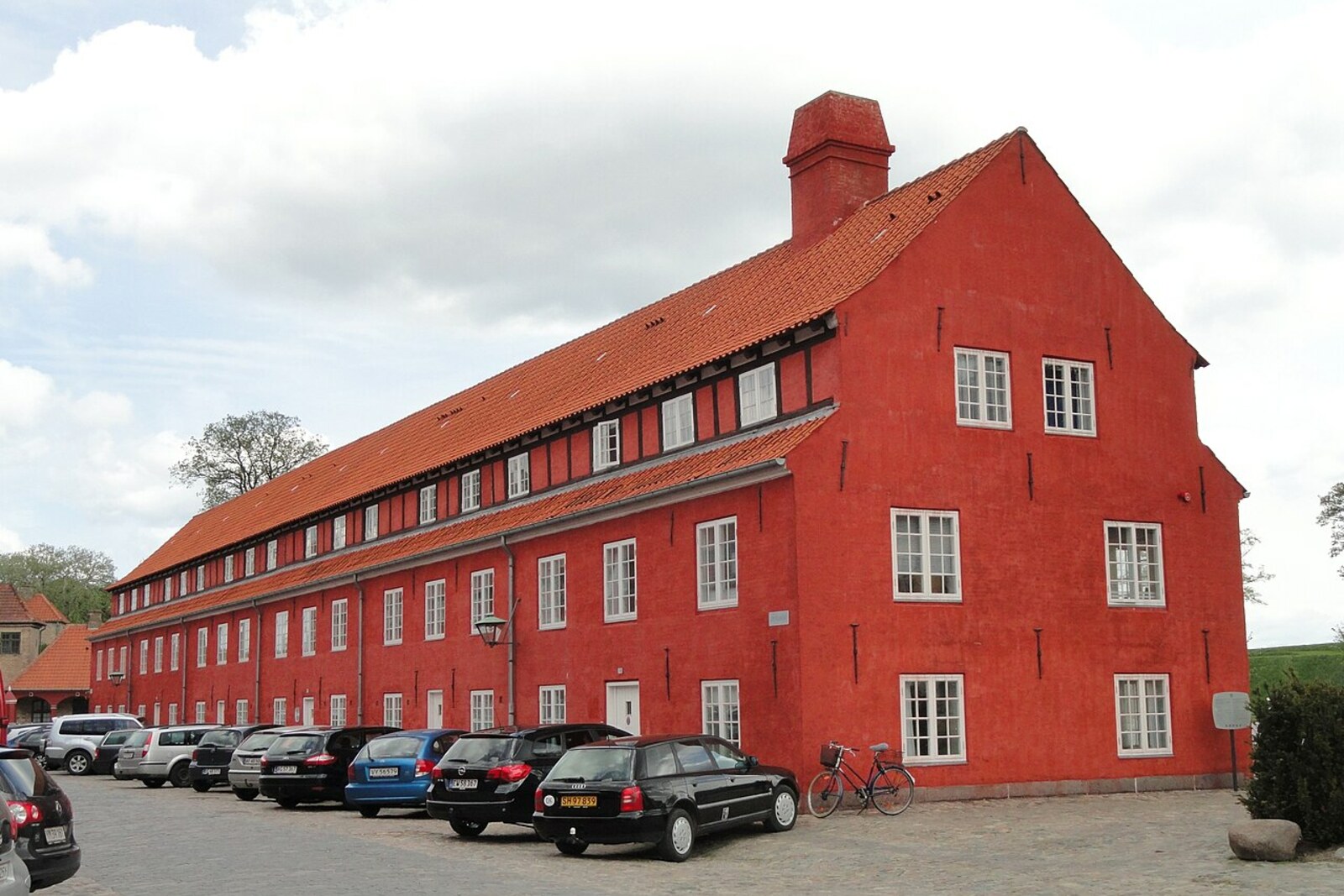
Look around first
What to notice
- Pentagonal ramparts
- Double moat
- Red Stjernestok
- Kirkepladsen
The story of the place
A pentagon of earthen ramparts encloses the old fortress by Copenhagen Harbour, while two moats and bastions turned it into an independent defensive strongpoint. After the Swedish siege, the former fortification on the city's northern outskirts was rebuilt to the plan of the Dutch military engineer Henrik Ruse. The fortress kept the approaches to the harbour protected and gave the monarch shelter within the city's fortifications. City residents now walk along the roads between the ramparts, but the red Stjernestok still houses military institutions.
On June sixth, sixteen seventy-six, a scaffold was erected on the square between the Artillery Barracks and the General's Barracks. Before the executioner stood Peder Schumacher, before his arrest Count Griffenfeld and state chancellor, who headed the royal chancery. He sought an alliance with France and tried to keep Denmark out of war with Sweden. Beside him lay a smashed count's coat of arms: under the sentence, Schumacher was to lose his title, property, honor, and life.
Kastellet was built a few years before his downfall. After the Swedish siege, King Frederick III commissioned the Dutch military engineer Henrik Ruse to turn the former fortification on Copenhagen's northern outskirts into a pentagonal citadel with bastions, a double moat, and two gates. It protected the approaches to the harbour and gave the monarch a defended barracks within the city's fortifications. Its official name was the Citadel of Frederiks Havn, but the shorter name Kastellet—“the citadel”—stuck.
Griffenfeld knew well the order these walls protected. He was born into the family of a Copenhagen wine merchant, made his career through education and service, and drafted the King's Law, which established the monarch's right to rule the state alone. Christian V made him a count, appointed him chancellor, and gave him vast estates. Griffenfeld's income, position, and even his new name depended on royal favor.
When Christian V decided to enter the war with Sweden, the chancellor lost the argument but continued secretly to seek an agreement with France. French diplomatic mail to Sweden passed through his address. An intercepted letter showed Griffenfeld's opponents that he was acting behind the king's back. On March eleventh, sixteen seventy-six, the chancellor was arrested on his way to a routine meeting with the monarch and brought here, to Kastellet.
Griffenfeld was locked in Stjernestok, one of the long barracks. While he was behind the ramparts and moats, a special court considered the charges of taking bribes, selling offices, and treason. On May twenty-sixth, the judges passed a death sentence.
The execution was set for this very place. Griffenfeld's coat of arms was smashed before the scaffold: the condemned man became Peder Schumacher once more, the wine merchant's son. He was already kneeling, waiting for the sword stroke, when the king's adjutant general stopped the executioner and announced a pardon. Christian V commuted the death sentence to life imprisonment.
Schumacher was returned to the same barracks. Four years later, he was transferred to the fortress of Munkholmen on an island near Trondheim. He spent another eighteen years there. Only in sixteen ninety-eight was the seriously ill prisoner allowed to settle in Trondheim itself; he died the following year. His title, lands, and former position were never restored to him.
The scaffold has long been gone from Kirkepladsen. The square itself remains, as does the red Stjernestok, where Griffenfeld awaited his sentence and where he was taken after the pardon. Today these old barracks house military institutions: Kastellet remains an active citadel, although city residents walk along its roads and ramparts.
Useful on site
Open in summer from 6:00 to 22:00, in winter—from 6:00 to 20:00. Free admission. Some areas remain an active military zone.
Checked: June 28, 2026. Check the official source before visiting.Plan mainly for a walk along the accessible paths: it is not always possible to enter the historic rooms. Observe the signs and the boundaries of service areas.