 Guide On Map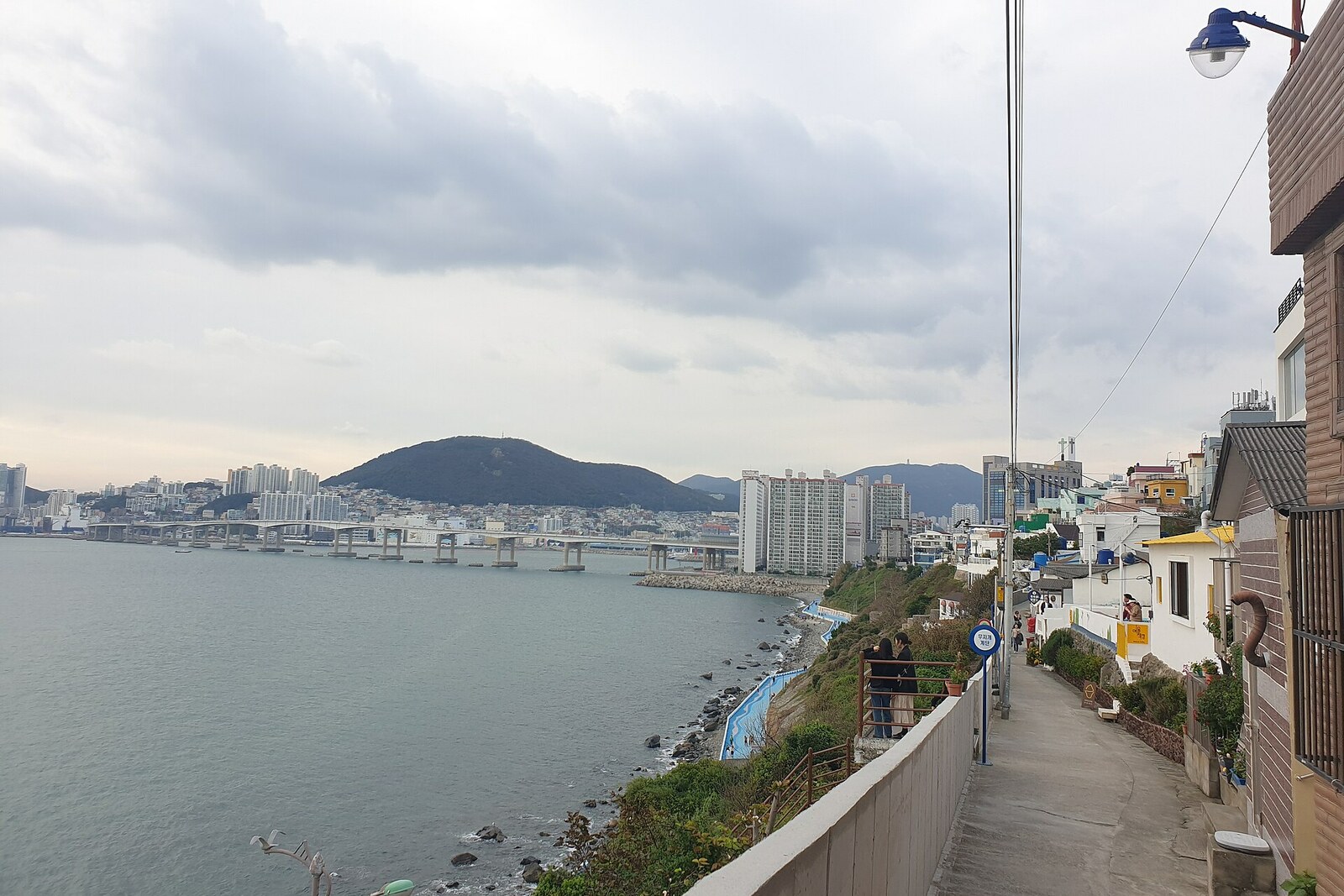
Look around first
What to notice
- White facades
- Low roofs
- Narrow passageways
- Sea cliff
The story of the place
The white facades appeared here much later than the first houses. In two thousand fourteen, Busan officials separately paid for painting the buildings along the alleys, repairing restrooms, installing signs, and installing works of art. The older part of this picture is the cramped plots, low roofs, and passageways only a few steps wide.
They were left by families who fled the Korean War. Many reached Busan late, when the level land around the port and the first temporary settlements were already occupied. People crossed the bridge to Yeongdo and climbed the island’s western slope. There was no prepared land for housing here: narrow ledges remained between the road and the sea cliff.
The refugees needed a roof they could put up immediately and with almost no money. They fastened planks to the slope, assembled small houses, and added new rooms wherever they found a few more free meters. During typhoons, such structures could be torn away entirely. The families had nowhere to go, so they rebuilt their homes on the same ledge.
The nearby port made it possible to look for work in workshops, at small shipyards, and in Yeongdo ship repair. Other poor workers later rented the cheap rooms as well: several families could use one kitchen and one restroom. In the nineteen sixties and seventies, the temporary settlement became permanent. Houses occupied almost the entire accessible slope, and the roads were the gaps residents left between the walls.
In an official survey, two hundred fifty-two of the three hundred six structures were found to have been built without permission. There was no room left for ordinary streets. This is how fourteen short alleys descending across the village came about: people carried water, food, and everything needed to repair houses along them.
The name Huinnyeoul means “white stream.” It is associated with streams that ran from Bongnaesan to the sea and turned into white water on the steep descent. The white walls along the alleys were painted later for the cultural village; the width of the passageways was determined by families who needed to fit a house between the road and the cliff.
Useful on site
Open residential alleys with no admission ticket; individual workshops, shops, and cafés keep their own hours.
Checked: June 30, 2026. Check the official source before visiting.Do not assume every staircase is public: signs of everyday life at an entrance suggest that private space begins beyond it.