 Guide On Map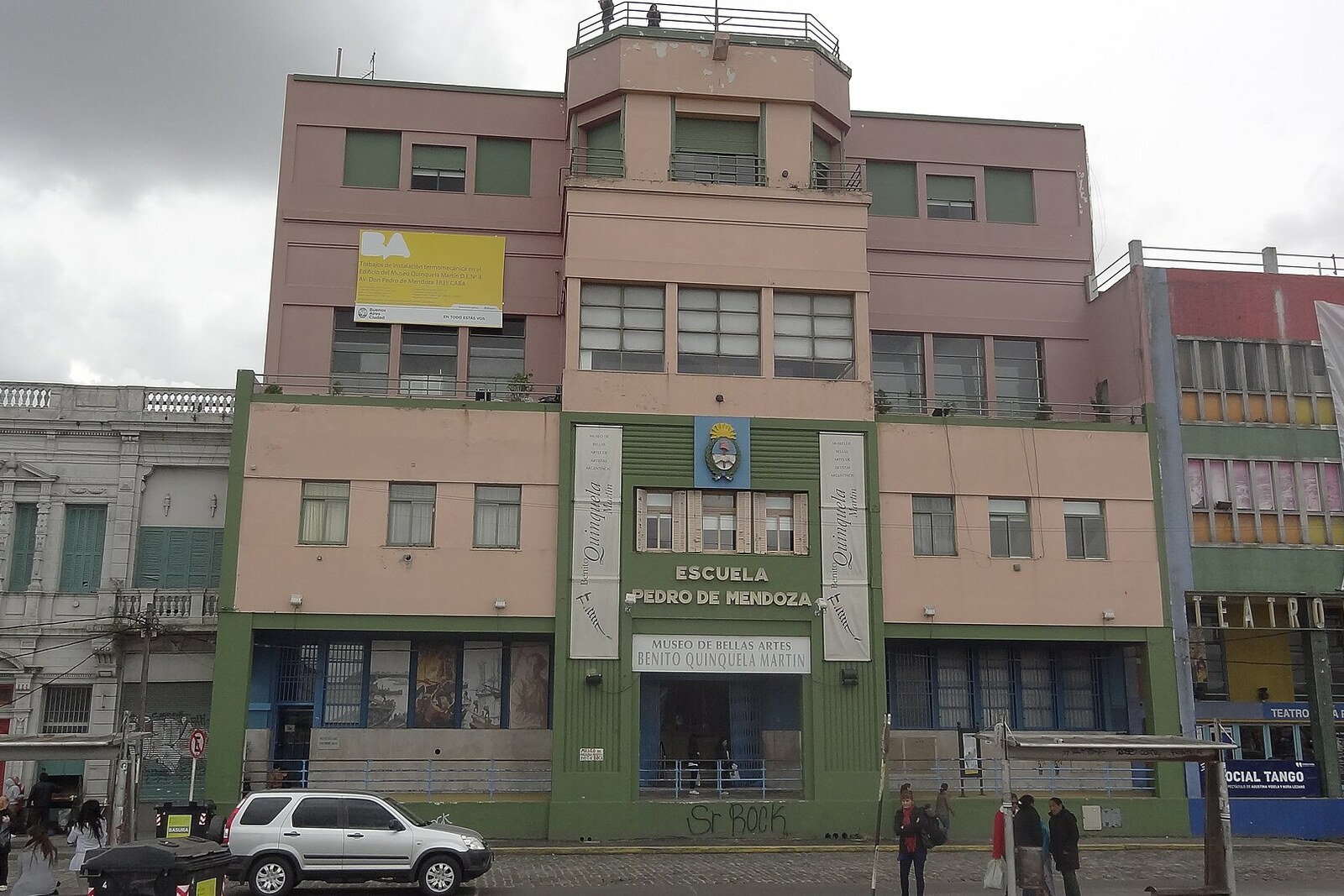
Look around first
What to notice
- School façade
- Port paintings above the school blackboards
- Museum galleries
- Apartment and studio on the top floor
The story of the place
In nineteen thirty-three, the artist Benito Quinquela Martín completed the purchase of this plot and transferred it to the National Council of Education. He wanted to place a daytime and evening elementary school on the lower floors, a museum of Argentine artists above it, and his own home and studio at the very top.
Quinquela knew well what it meant to leave the classroom early. At the age of ten, he stopped studying to help his adoptive parents in their coal shop. By fifteen, he was already unloading ships in the port. He painted after work, and his first studio was a room above the family coal warehouse. Later, images of docks, ships, and dockworkers brought him fame and money. He called the purchase of land for the school a way of returning to the neighborhood part of what he had earned by painting La Boca.
The dispute began when the artist decided to place sixteen enormous paintings in the classrooms. Some officials from the Council of Education objected: the images above the school blackboards would distract the children. For Quinquela, they were precisely what gave the school its meaning. Instead of classical ornaments and fairy-tale allegories, he painted coal loading, sail sewing, fishermen returning, a port carnival, and a flood in La Boca—the work and life that the students saw beyond the school doors and by which their parents earned a living.
Quinquela made the paintings free of charge. The Council eventually approved them, but required velvet curtains to be installed in front of some of the canvases. A teacher could reveal an image or hide it for the duration of a lesson. In this way, the adults retained the right to decide when children were allowed to see the walls of their own classroom.
In July nineteen thirty-six, the school received its students: the building was designed for one thousand children in two shifts. Two years later, the Museo Benito Quinquela Martín opened on the floor above. Quinquela collected works by Argentine masters here, moved into the top floor, and set up a studio beside his apartment. He later gave the museum a substantial collection of his own paintings and engravings.
The school was named after Pedro de Mendoza, the leader of the Spanish expedition that arrived to establish the first settlement of Buenos Aires: at that time, this stretch of shore was associated with that founding of the city. The museum now bears the name of Benito Quinquela Martín—the artist who gave the land and the paintings, but himself lived above the classrooms.
The velvet curtains have long been gone. Lessons continue on the lower floors, the port scenes still occupy the walls above the blackboards, the museum is open above, and Quinquela's apartment and studio have been preserved on the top floor.
Useful on site
Museum hours change; before visiting inside, check the official MBQM website or the city page.
Checked: June 28, 2026. Check the official source before visiting.The interior is especially important for the murals and collection, but check access separately. Do not assume that the school facilities are open to visitors together with the museum.