 Guide On Map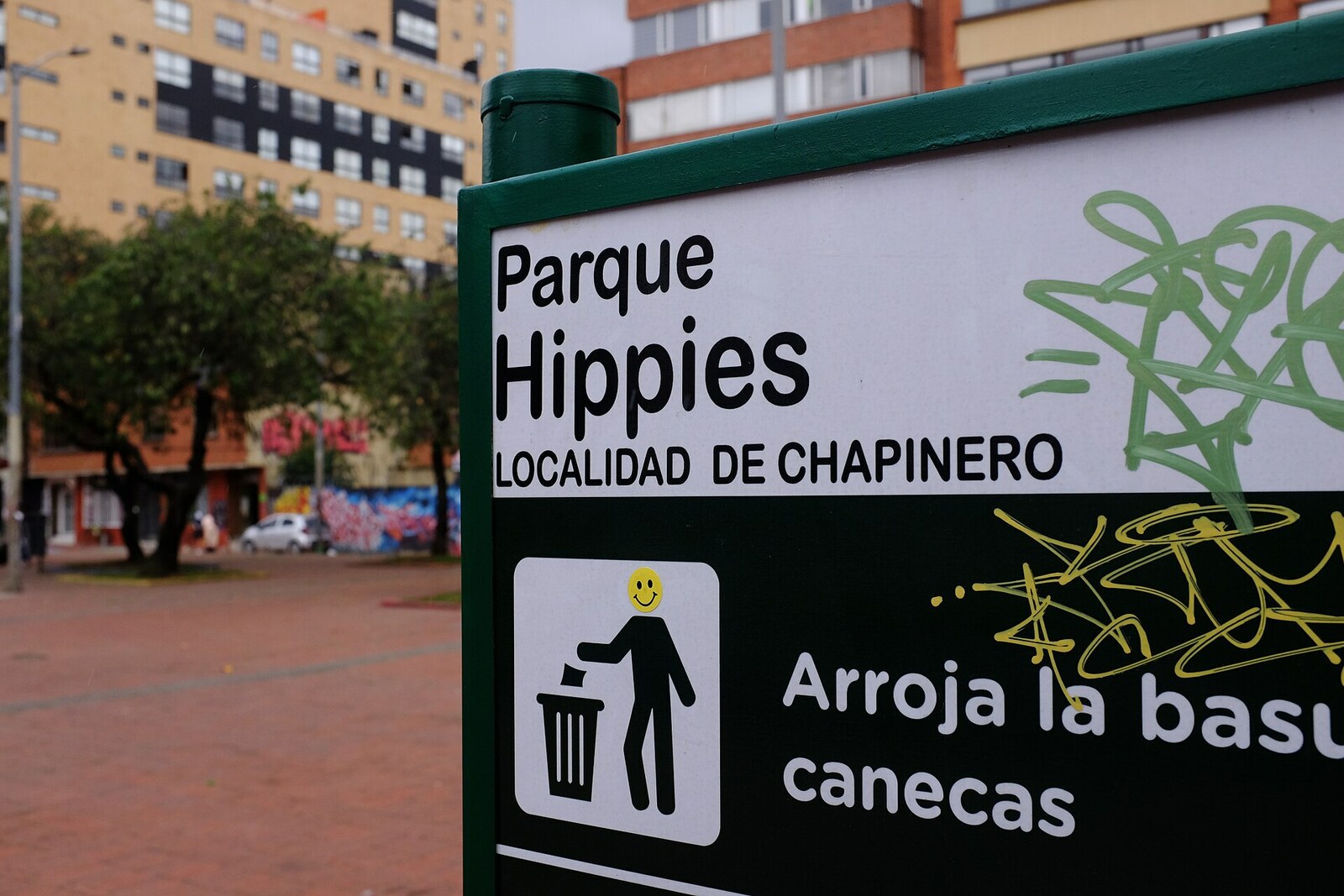
Look around first
What to notice
- Plaque reading “Antonio José de Sucre Park”
- Bronze bust
- Open area
- Benches
The story of the place
The open area with benches remains beside the former commercial arcade on Sixtieth Street; an ordinary shopping center now operates in its place. At one time, the inexpensive neighboring pavilions were occupied by musicians, artists, and small vendors who needed to support themselves with their own commissions. The park itself was then a neglected place for chance meetings, and later became a venue for free concerts, readings, plays, and fairs.
The park at the corner of Seventh Avenue and Sixtieth Street has three names. A plaque reading “Antonio José de Sucre Park” survives on the wall by the northwestern corner. It was given that name in nineteen forty-five, for the one hundred fiftieth anniversary of the birth of Sucre—a general in the war of independence and a commander who defeated the Spanish army at Ayacucho. But the bronze bust in the park itself depicts someone else. It is the Colombian Romantic poet Julio Flórez; his monument was installed here in nineteen sixty-seven. Because of the bust, the place was also, for a time, Julio Flórez Park.
Two years later, that name was displaced by people who came here after a concert. On May thirty-first, nineteen sixty-nine, the new psychedelic group Siglo Cero performed at the nearby La Comedia Theater. Musicians Humberto Monroy and Roberto Fiorilli were looking for something new to do after the breakup of Los Speakers, one of Colombia’s first rock bands. The concert was organized by Álvaro Díaz and Edgar Restrepo—young promoters trying to prove that local experimental music could be released without major companies.
All four were connected with the commercial arcade on Sixtieth Street. There they opened a shop and the independent record label Discos Zodiaco. In the neighboring pavilion, Tania Moreno and her assistants drew posters and sold them for two pesos. Low rent allowed young musicians, artists, and vendors to support themselves with their own commissions. The park was nearby, but at the time it was neglected and served only as a chance meeting place.
La Comedia’s hall filled up, and after the performance the listeners came here to celebrate. It did not end with one evening. The young people mowed the grass, brought flowering plants from their homes, painted the benches, and covered the fountain with oil paints. They needed a place where they could gather without a ticket or a venue owner, while the commercial arcade was already providing performers, posters, and a regular audience.
Free concerts, poetry readings, plays, and happenings were held here—improvised performances in which the stage and the audience were not separated in advance. On weekends, the park could not hold everyone who wanted to come. The press called Bogotá musicians, owners of small shops, artists, and young people with long hair hippies: they were adopting rock, communal living, and a rejection of the habits of their parents’ generation, but they earned their money here in very tangible ways—from records, clothing, posters, and handicrafts.
The original group soon scattered into bands, communes, and new pursuits. The fountain they painted did not survive in its former form, and the old arcade west of the park became an ordinary shopping center. But the popular name outlived both Sucre and Flórez. Today, city institutions themselves use it; concerts, theatrical performances, and art fairs are again held in the square. The general remains on the plaque, the poet on the pedestal, and the park is named for the people who brought plants here from their own homes and created a stage without walls.
Useful on site
Open city park; comfort and events depend on the time of day and current city rules.
Checked: June 28, 2026. Check the official source before visiting.This is an open public space: keep an eye on your belongings and do not disturb current visitors. For the story, it is enough to walk through the park and see the monument.