 Guide On Map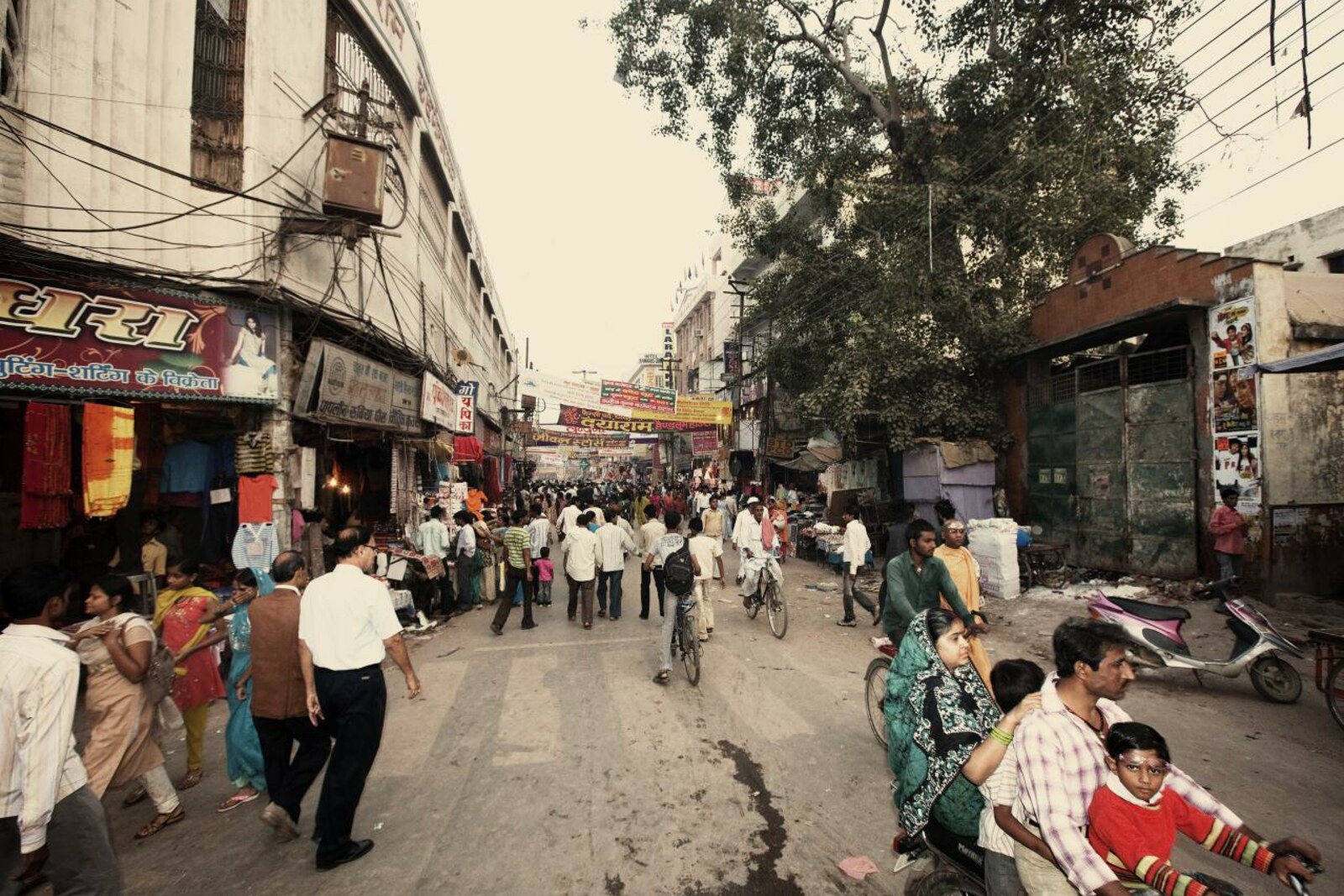
Look around first
What to notice
- The building of Marwari Hindu Hospital
- The intersection of roads to the river and the old city
- The line of the road on the site of the former canal
The story of the place
Godowlia is an intersection from which the road goes to Dashashwamedh Ghat, while passages into the old city lead to the temple quarter. This is why city transport, trade, and pilgrims' walking routes converge here. This junction arose along the line of a vanished watercourse.
The origin of the word “Godowlia” is interpreted in different ways. One other thing is known reliably: on James Prinsep's map of eighteen twenty-two, Godowlia Nala is already marked here—a canal through which water drained toward the Ganges. Prinsep served as assay master at the mint, but took up the drainage of the city's low-lying areas. In eighteen twenty-four, under his direction, a paved drain was laid, connecting the ponds of Beni and Mishr Pokhra to this canal. Later, the watercourse was covered over, and its bed was turned into a road to the river. One of the bridges over the canal once stood by Marwari Hindu Hospital, near the intersection.
At this hospital, on January thirteenth, nineteen twenty-eight, Manindra Nath Banerjee met Jitendra Nath Banerjee, deputy chief of the colonial police. The policeman was walking to the nearby Kashiraj Kali Temple. Manindra had come with a revolver and a different purpose.
Three years earlier, members of the anti-colonial underground stopped a train at Kakori and took the treasury it was carrying, intending to use the money to pay for the organization's work. One of the participants was Rajendra Nath Lahiri, a revolutionary close to Manindra. The investigation ended in death sentences, and Lahiri was hanged in December nineteen twenty-seven.
Jitendra Nath took part in the investigation of the Kakori case. Manindra believed that it was Jitendra Nath's work that helped send Lahiri to the gallows. Even after the first arrests, Manindra had been looking for weapons to deal with informers and investigators. According to a local account, Jitendra Nath was his maternal uncle, although documents do not confirm this kinship entirely reliably.
Near the hospital, Manindra shot the policeman three times. Jitendra did not die at once. Manindra was arrested, and the court sentenced him to ten years of hard labor. His mother, Sunaina, sold part of her property to pay for her son's defense. In Fatehgarh prison, he joined a prisoners' hunger strike against the treatment by the prison administration and died on June twentieth, nineteen thirty-four.
Of the former canal, all that remains above ground is the name Godowlia. Of the shooting, there remains the building of Marwari Hindu Hospital, beside which it took place. There is no separate commemorative marker to Manindra Nath Banerjee at the intersection.
Useful on site
Open urban space; traffic and access change by police order, especially during festivals and days of peak crowds.
Checked: June 28, 2026. Check the official source before visiting.Choose a spot at the edge of traffic where you can listen without obstructing pedestrians or vehicles.