 Guide On Map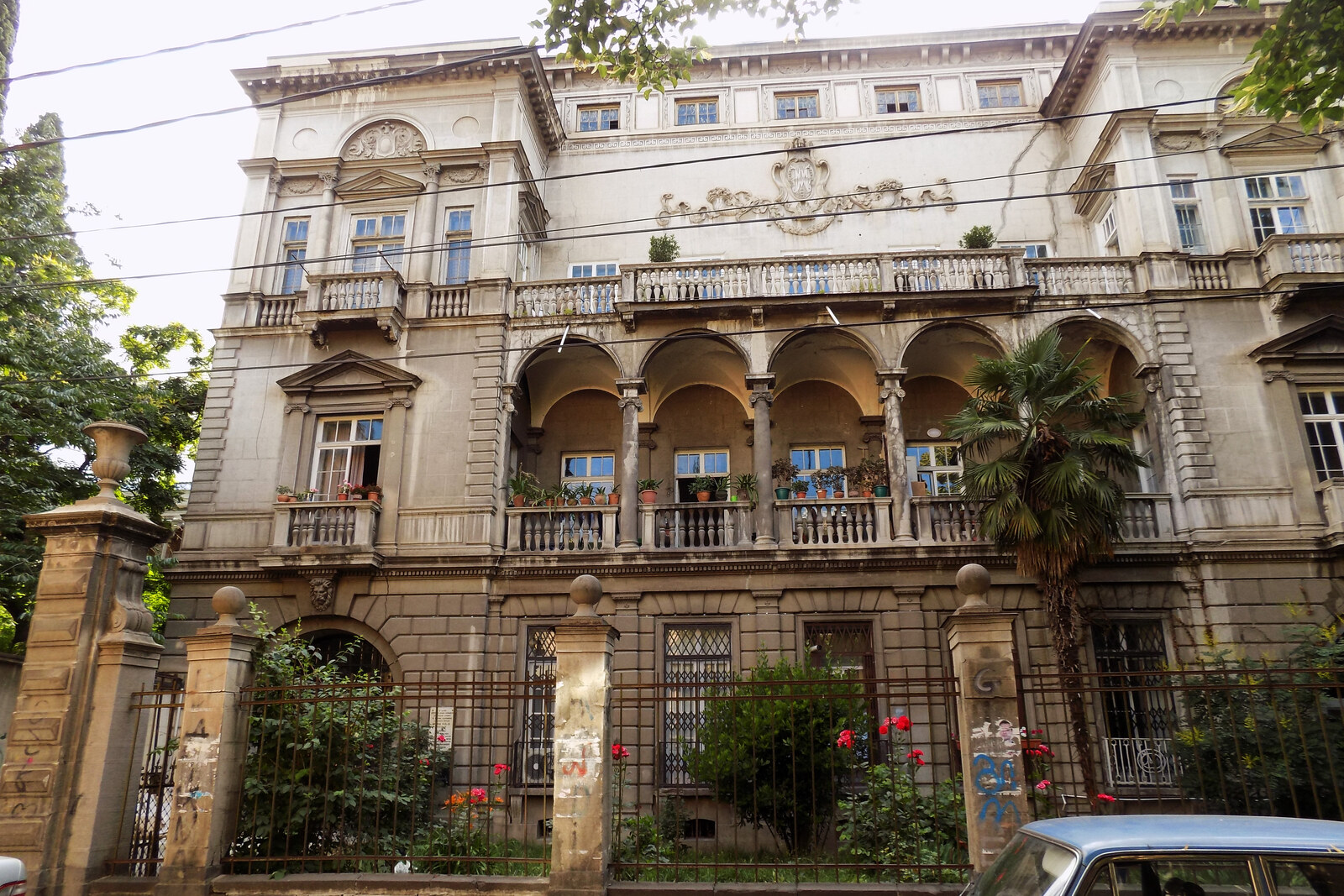
Look around first
What to notice
- Open stone balcony
- Small front garden
- Initials “A” and “M”
- Memorial plaques
The story of the place
The house known as Maylov Brothers' House was built for Alexander and Arkady Maylov. Arkady was called Arshak in the Armenian community, so he is sometimes mistakenly turned into a second brother. The Maylovs traded in fabrics and owned shops and real estate. Alexander ran the family businesses, while Arkady represented Tbilisi merchants in the city council and the exchange committee. In nineteen fourteen, they commissioned the architect Gavriil Ter-Mikelov to create a residential and rental building here: some of its rooms were intended for the owners, while the rest brought in rent. An open stone balcony and a small front garden gave the building the nickname Maylov Brothers' House.
After the Soviet regime was established, the Maylovs' houses and shops were nationalized. Relatives who remained in Tbilisi were allotted a small room each, while part of the family left the country. Arkady and his daughter ended up in France. The large apartments that had been vacated were given to the republic's leaders.
Mamia Orakhelashvili, an old Bolshevik and former first secretary of the Communist Party of Georgia, moved into one of them. Living here with him were his wife Mariam, who had previously headed the Georgian People's Commissariat of Education, their daughter Ketevan, and her husband Evgeny Mikeladze. Mikeladze was the chief conductor of the Tbilisi Opera and was creating the republic's first state symphony orchestra. At the beginning of nineteen thirty-seven, he directed the musical section of the Georgian Art Decade in Moscow. That same year, Mikeladze left this house for a rehearsal and was arrested at the theater.
By then, investigators were already extracting confessions from Mamia Orakhelashvili. After torture, he signed false testimony against other people, but this did not save him. He was shot. Mariam Orakhelashvili was also arrested and shot. Evgeny Mikeladze was declared an enemy of the people and sentenced to the same fate. Ketevan was sent to a camp; of the four adult members of the family, only she returned.
The vacated apartment was given to Filipp Makharadze, another old party leader. Today, memorial plaques for Mikeladze and Makharadze hang side by side on the facade. Above them, on the stone and iron balcony railing, the letters “A” and “M” remain—the initials of the owner for whom this house was built.
Useful on site
A city route stop; access to private entrances, museums, and courtyards varies, so check the rules on site and do not enter residential spaces without an invitation.
Checked: date not specified. Check the official source before visiting.For the finale, it is enough to remain outside: the gate and the plaques provide the key to the house's entire history. Do not seek access to the apartments, and do not turn the memorial markers into scenery for filming.