 Guide On Map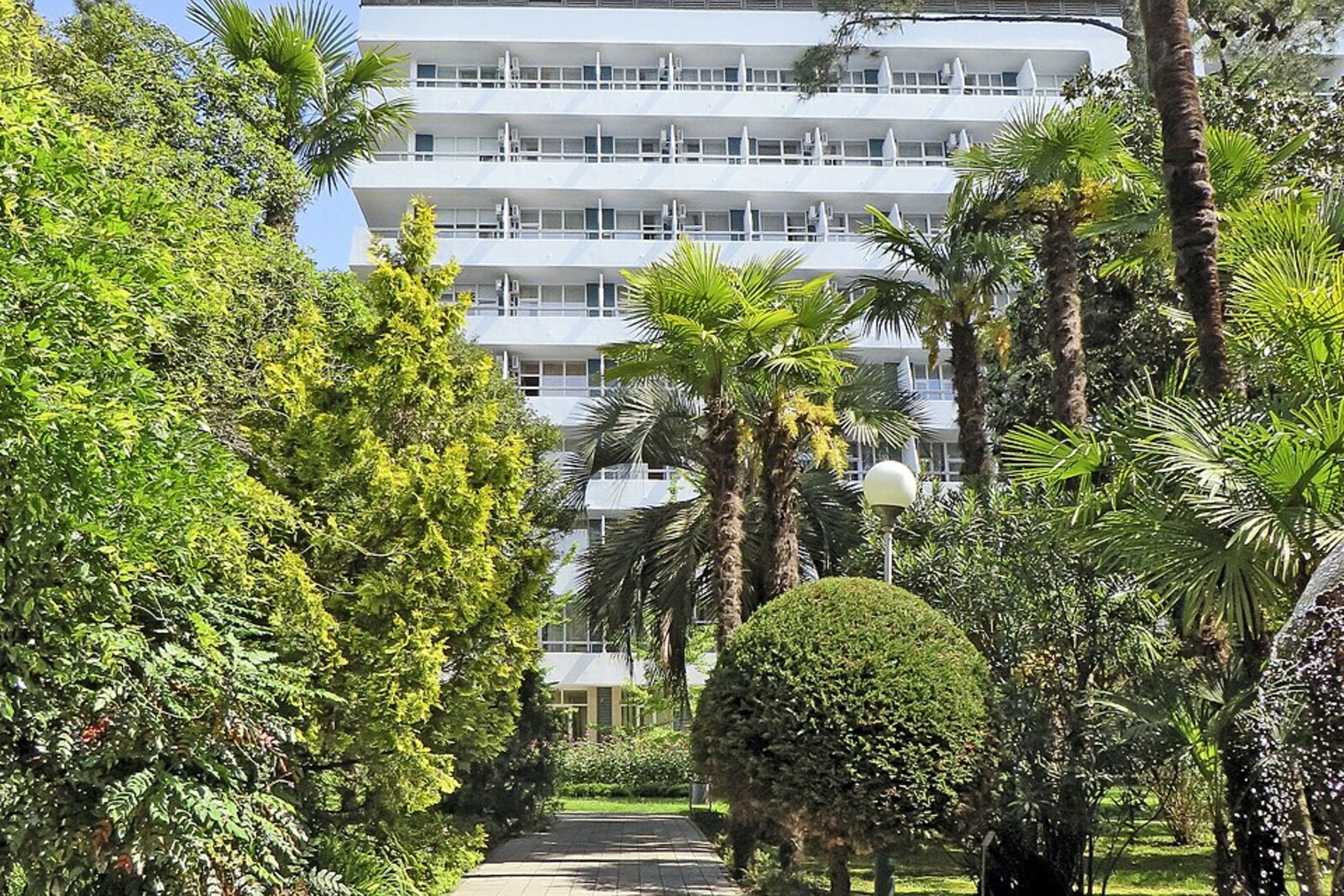
Look around first
What to notice
- Moorish villa
- Health resort fence
- Buildings deep within the grounds
The story of the place
The health resort's residential and medical buildings extend deep into grounds once divided among several private dachas. The private dachas were combined into a rest home for Party workers and former political convicts, and later the sanatorium received the name of Mikhail Frunze. At the eastern edge, the Moorish villa survives; it is now a service building with a kitchen and dining room for staff. The old house remained inside a large resort complex, although its current purpose has long been different.
Late in nineteen twelve, the operatic baritone Nikolai Artemyevich Shevelev bought a Moorish villa with land here from General Veretennikov for seventy-five thousand rubles. Shevelev lived by the stage and touring fees. He knew that for a singer, illness takes away both voice and income at once, and he conceived of establishing a sanatorium at his dacha for ill and impoverished artists.
The plan was designed for two hundred people. Shevelev promised a medical facility, an inexpensive boarding house, a library, and a concert hall with five hundred seats, where artists could rehearse and prepare new roles. The first forty rooms were intended for those in need free of charge. Expenses were to be covered by donations, proceeds from charity concerts, and several expensive rooms for well-off guests. In time, the singer planned to transfer the sanatorium to the Russian Theatre Society, while retaining the right to live here for the rest of his life.
About five hundred invitations were sent out for the ceremonial groundbreaking, and the opening was scheduled for May first, nineteen fourteen. However, the promised building never appeared. An inventory from nineteen eighteen lists the estate's former buildings; it contains neither a two-hundred-bed medical facility nor a large concert hall. Theater journals called the villa itself a sanatorium for poor artists, but no evidence survives that it actually received such patients.
After the revolution, the dacha was nationalized, and Shevelev no longer decided its fate. On July fifteenth, nineteen twenty-two, the resort administration combined seven former private dachas and opened the Rabochaya Gazeta rest home here. The first arrivals were seventy Party workers and former political convicts—people who, under the former state, had served hard labor sentences for revolutionary activity. The sanatorium the singer had sought came into being without him and received different guests.
The health resort received the name of Mikhail Vasilyevich Frunze in November nineteen twenty-five, after his death. Frunze was one of the main commanders of the Red Army during the Russian Civil War. Before the revolution, he was twice sentenced to death, and he spent seven years and nine months at hard labor. He did not found this sanatorium: by the time it was renamed, former convicts among others had already been receiving treatment here for three years. His surname commemorated the deceased Red commander, whose own biography was understandable to the first vacationers without explanation.
Now, behind the fence, there is an operating health resort with residential and medical buildings. Shevelev's Moorish villa survives at the eastern edge of the grounds as the eighth service building. It has no large stage or free rooms for artists: since nineteen seventy-seven, the singer's former house has contained a kitchen and dining room for the sanatorium's staff.
Useful on site
Operating sanatorium; entry is controlled. The pass office is open 7:30–19:30, break 12:00–13:00.
Checked: June 24, 2026. Check the official source before visiting.Do not treat the park as a freely accessible city passage. If staff have not confirmed access, remain at the publicly accessible viewing point.