 Guide On Map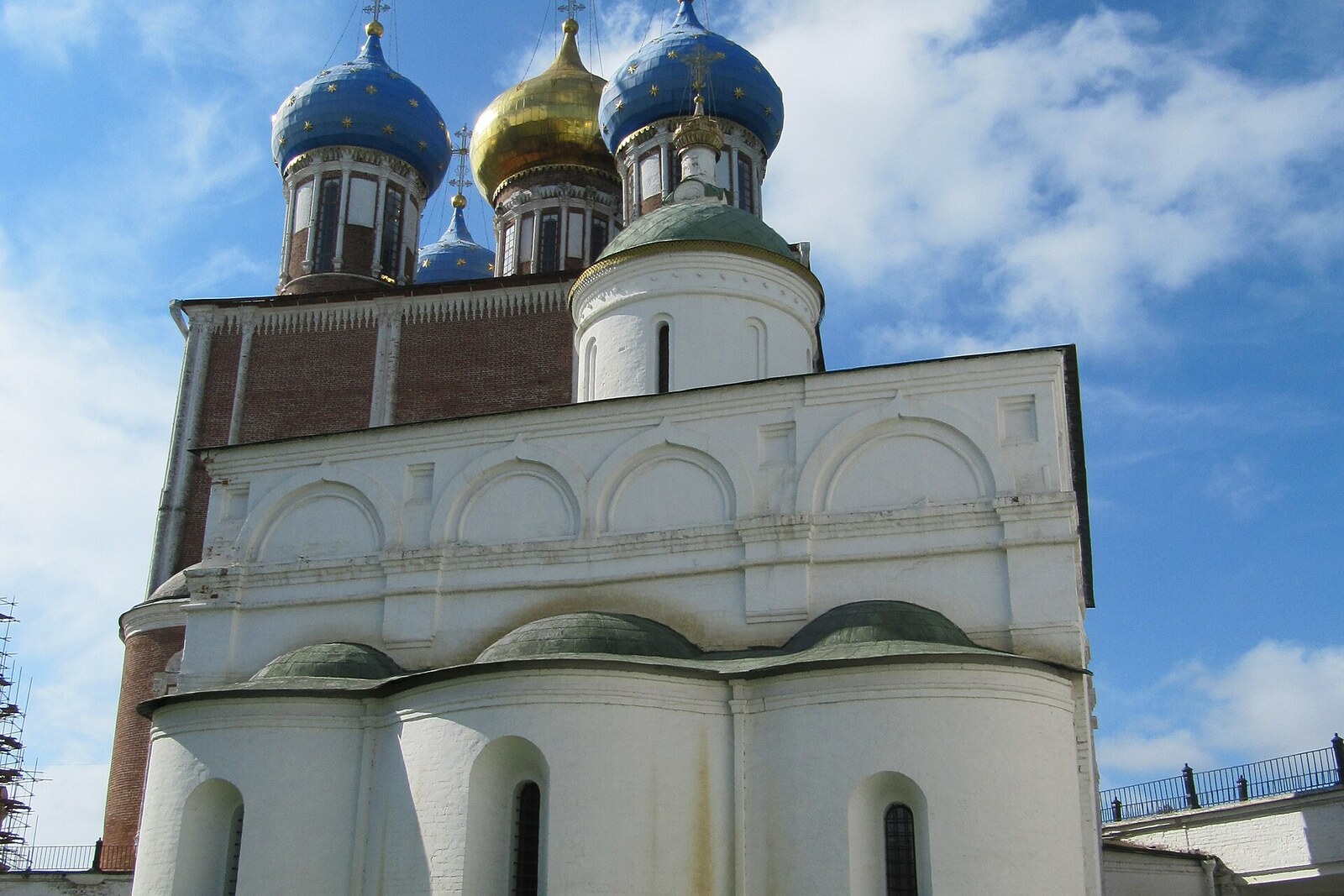
Look around first
What to notice
- Western entrance
- Floor slabs
- Southern wall
- The cathedral vaults
The story of the place
The western entrance leads beneath the vaults of a small cathedral, where the floor is made of heavy slabs. Additions once stood against the southern wall, but only traces of them remain. When the walls needed reinforcing, new foundations had to be laid from inside, directly beneath the vaults.
Archangel Michael, whose name the cathedral bears, leads the heavenly host in church tradition and is the patron of warriors. At the end of the fifteenth century, Ryazan Princess Anna Vasilievna and Bishop Theodosius conceived of a church beside the prince's court: the prince's family would have its own church, and the bishops of Ryazan would have a place for burial. Theodosius was the first to lie here beneath the floor, in fourteen eighty-one. In time, twenty-two bishops' burials were arranged in the cathedral.
Five centuries later, this burial vault hindered efforts to save the building itself. In the summer of nineteen seventy-eight, restorers were reinforcing the walls and underpinning them with new foundations. Outside, remnants of lost additions adjoined the southern wall, so the work had to be done from inside—where the graves were.
The Moscow archaeologist Elena Khvorostova was responsible for opening the burials and had to preserve the connection between the remains and the names of the dead. The work was carried out with permission from the Institute of Archaeology and under the supervision of a commission. Khvorostova opened eighteen crypts. The remains from eight burials were removed, described, and reburied in the cathedral on November sixteenth. The documents, however, did not record the exact location of the new burial.
Twenty years later, Archbishop Simon of Ryazan authorized a search for the remains of Misail and Theodoret—two bishops buried here whom the church venerated as saints. Workers from the restoration workshop began with the places indicated by a participant in the nineteen seventy-eight excavation. The first search yielded nothing.
On June eighteenth, nineteen ninety-eight, teachers and students from the theological school joined the work. Near the western entrance, one floor slab had sunk by several centimeters. Beneath brick, reinforced-concrete slabs, and sand fill lay the crypt of Bishop Meletius. On the lid of his coffin stood boxes containing remains transferred by the restorers twenty years earlier. The church commission recognized the two groups as the remains of Misail and Theodoret.
On September eighteenth, the found remains were carried out of Archangel Cathedral and transferred to Trinity Monastery in Ryazan. Misail had been buried beside the southern side of the altar here in sixteen fifty-six; the site of his former grave remained in the cathedral, while he now rests in another part of the city.
Useful on site
An active cathedral; entry and museum display depend on services and the current schedule.
Checked: June 24, 2026. Check the official source before visiting.Worship and museum display are combined here; during a service, postpone the audio and viewing the exhibits.