 Guide On Map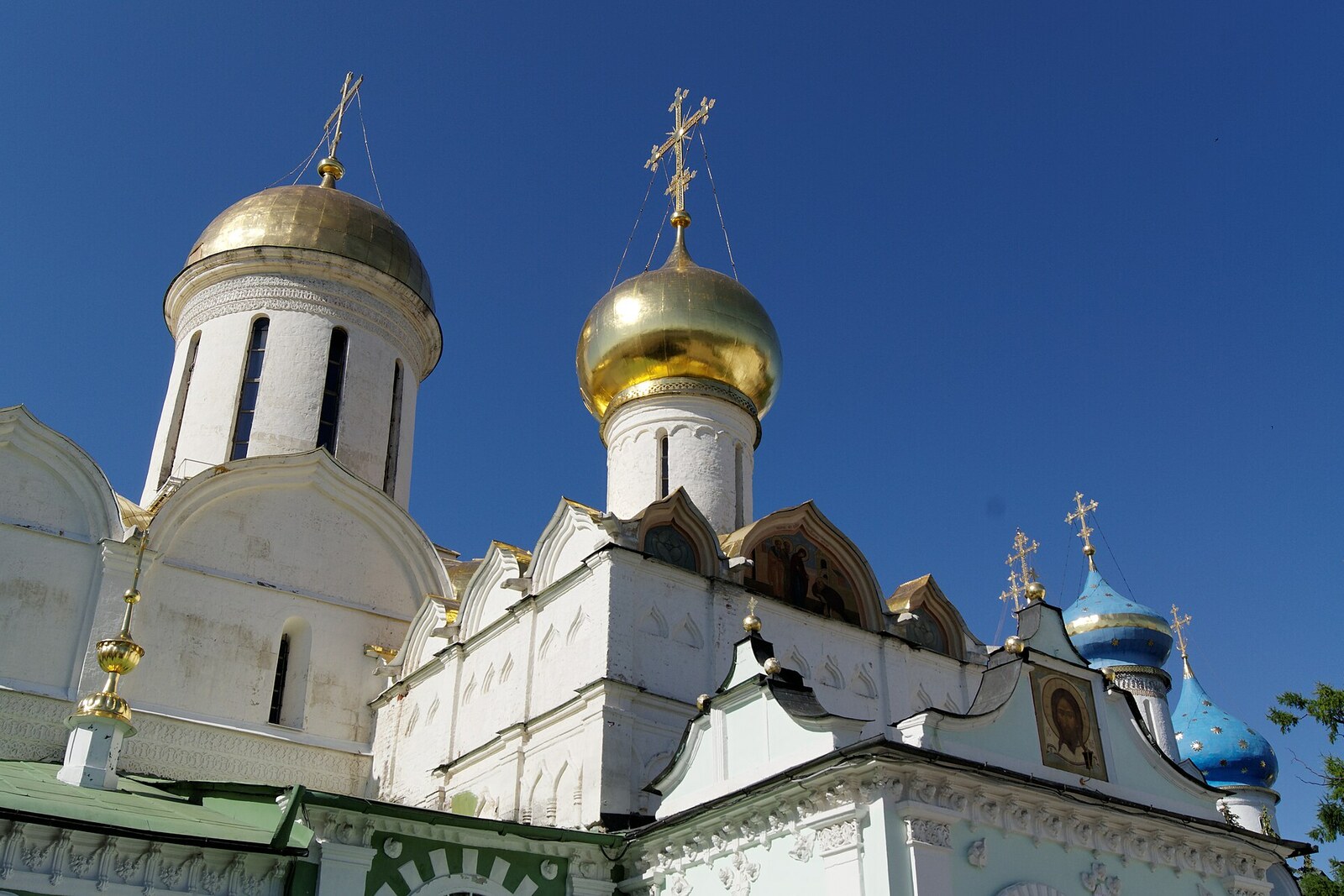
Look around first
What to notice
- The cathedral's southern doors
- The silver reliquary by the southern wall
- The iconostasis
The story of the place
The stone Trinity Cathedral rose over the grave of the monastery's founder, replacing a wooden church here. It was dedicated to the Trinity, as was the monastery's very first church. By the southern wall, beside the iconostasis, stands a silver reliquary containing the relics; it was wooden before. The liturgy is celebrated here from morning, followed by short prayer services at the reliquary until evening.
In February fourteen forty-six, Vasily II Tyomny, Grand Prince of Moscow, came here with his young sons. He ruled Moscow, was trying to hold on to the throne after a long civil war, and wanted to venerate the remains of Sergiy Radonezhsky—the monastery's founder, already revered as a saint.
Several months before the trip, Vasily was taken captive after a defeat near Suzdal. He was released for an enormous ransom; an Horde detachment entered Moscow with the prince and was to receive the money. The terms of his release gave rise to rumors and discontent. Dmitry Shemyaka, Prince of Galich—Vasily's cousin and longtime rival for the Moscow throne—took advantage of this. While the Grand Prince was at the monastery with a small retinue, Shemyaka's men occupied Moscow and seized the treasury. Ivan Andreyevich of Mozhaysk, an ally of the conspirators, was sent after Vasily.
Earlier, Vasily and Ivan had sealed an oath here: at Sergiy's tomb, they kissed a cross and an icon lying on it, promising not to harm one another. Now Ivan came to the cathedral's southern doors with armed men. Vasily opened the doors himself, holding the same icon—The Appearance of the Mother of God to Sergiy. He reminded Ivan of the promise, returned the image to the tomb, and fell to his knees before it.
Ivan ordered the prince seized. Vasily's sons and several boyars managed to escape. Vasily himself was taken to Moscow and blinded three days later, after which he and his wife were sent into confinement in Uglich. From then on, he was called Vasily II Tyomny.
Shemyaka took the Moscow throne but, less than a year later, released his blinded rival, expecting that Vasily would no longer seek Moscow. Vasily's former supporters began to gather around him. They returned the capital to him, Shemyaka fled, and Ivan Andreyevich of Mozhaysk later lost his principality and also went into exile. Vasily II Tyomny ruled for another fifteen years.
The cathedral was still nearly new at the time. Nikon, Sergiy's disciple and the abbot, began building it in fourteen twenty-two over his mentor's grave, on the site of an earlier wooden church. The church was consecrated in the name of the Trinity—the Father, the Son, and the Holy Spirit—to whom Sergiy had also dedicated the monastery's first church.
The tomb by the southern wall, beside the iconostasis, remains the cathedral's center. The silver reliquary came later than the wooden one before which Vasily II Tyomny stood, but Sergiy's relics are still inside. The liturgy is celebrated here every day, followed by short prayer services at the reliquary until evening. Pilgrims approach the very place where princes once reinforced a promise with a cross and an icon—and where one of them nevertheless handed the other over to the guards.
Useful on site
An active church with regular services and veneration of the relics of St. Sergiy; the exact access arrangements vary by date, service, and queue.
Checked: date not specified. Check the official source before visiting.A service and a queue may be inside; if you cannot enter, take in the scale of the building and look at it from outside.