 Guide On Map
Quadrilatero: Markets and Trading Streets
From Mercato delle Erbe to Palazzo della Mercanzia
Guide On Map on your phone
Open the walk like a regular app
It takes about 10 seconds to install. No app store needed.
The whole path
Route map
About the walk
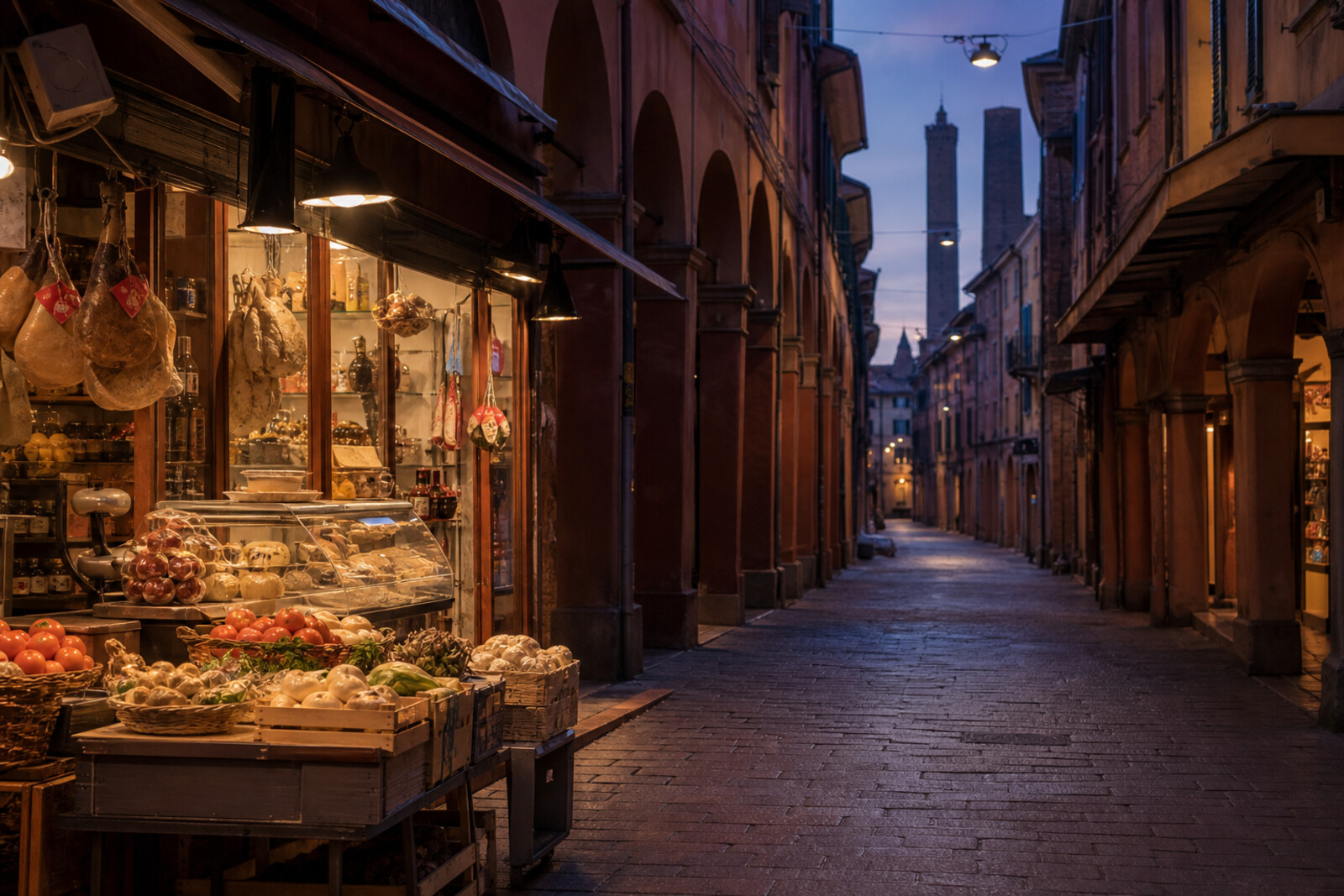
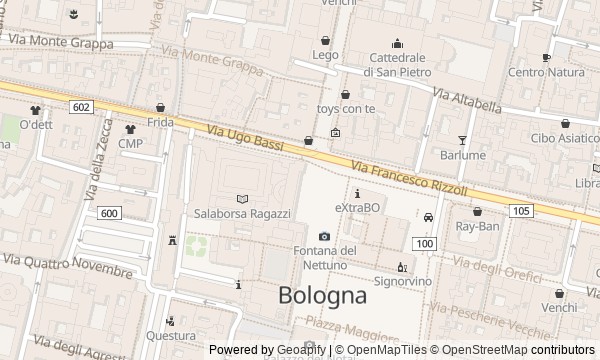
You will begin at the large covered market on the western side of the center, then follow Via Ugo Bassi toward the narrow streets of Quadrilatero. Along the way, broad porticoes give way to jewellers' windows, fish stalls, shared tables, and an old family bakery. The walk ends at the palace where merchants once settled trade disputes themselves.
This is less a walk about Bologna food than about the people who fought for a place for their basket, defended their right to sell, and tried to save a shop after demolition or war. You will find out why the market was moved off the main square, how a cash register derailed one project, and what could happen to a banker after the bell rang.
The story stays calm and concrete: a sign, cellar, counter, or balcony matters more than broad claims about tradition. By the end, you will read Quadrilatero through its street names and understand who secured trade here, and at what cost.
Why this order
Mercato delle Erbe sets the route's starting measure: a permanent place under a roof instead of a basket in the square. Its main facade leads to Via Ugo Bassi, where the relocation of one market became part of a larger remaking of the city center. Heading east, you reach Via degli Orefici, where the width of the new street shows what disappeared to make way for a straight thoroughfare. Just beyond it begins the narrow Via Pescherie Vecchie: its surviving row of old trading premises makes a direct contrast with the dismantled district. Turning toward Via Clavature takes you around the same block from the other side and links the income from fish stalls to a former hospital. Its facade brings you to the entrance of Mercato di Mezzo, where the old market site received a new layout. Returning to the trading streets leads to Via Drapperie: after the shared market comes the story of one family shop. The street ends at Palazzo della Mercanzia, where the chain from counter and guild concludes with the court that guarded trust between merchants.
Those who want to understand Quadrilatero, not just eat there Those interested in old markets, craft streets, and family shops Those who enjoy history told through small human decisions
Those expecting tastings and a list of places to eat Those looking for an overview of Bologna's main cathedrals, towers, and squares Those for whom architectural styles matter more than the history of everyday trade
Before you go
Do not turn the walk into a checklist of purchases: an important part of the route lies between the shops, on facades, corners, and old names. Keep your belongings close in the market crowds, and do not stop in the middle of a narrow passage while listening. Before setting out, check access separately for Church of Santa Maria della Vita and other interiors: the route remains complete without going inside, but the terracotta group can only be seen in the church. Leave time for an unplanned stop for food or wine.
When to go
Start in the second half of the day to catch the markets in trading mode, then see Quadrilatero in the evening light by the end. Keep an unhurried pace: the distances are short, but each street calls for a pause and a look around.
Backup plan
In rain, spend longer under the roofs of Mercato delle Erbe and Mercato di Mezzo, and take exposed stretches beneath available porticoes. If the market, church, or an individual shop is closed, do not reroute the whole walk: listen from outside and study the street details, since the story here is spread across the district itself. For food, choose an open place as you find it rather than counting on a particular counter or free table.
Route conditions
Surface. Paved — 1.1 km (data covers 93% of the route)
Facilities. Toilets — 4; drinking water — 4
Elevation. Ascent — 7 m; descent — 3 m
OpenStreetMap extract of June 18, 2026: database data, not a check on the ground. Data © OpenStreetMap contributors, ODbL licence
Walk plan
Open in maps ↗- 1
Mercato delle Erbe
This is where the story begins of people whom urban improvements deprived of their customary place of trade. - 2
Via Ugo Bassi
The commercial thoroughfare links three vanished everyday names with the posthumous memory of one man. - 3
Via degli Orefici
The street's width will show which part of the old trading quarter was demolished to make way for the new thoroughfare. - 4
Via Pescherie Vecchie
The old shops will explain how the city twice stripped fishmongers of their monopoly and again allowed competitors access to buyers. - 5
Via Clavature
Here, a failed attempt at reconciliation will lead to a hospital that occupied almost the entire block. - 6
Mercato di Mezzo
This stop explains why independent vendors remained under one roof after the renovation. - 7
Via Drapperie
A family business will provide a continuous thread of local trade from the nineteenth century through to subsequent generations. - 8
Palazzo della Mercanzia
The finale will show how merchants sped up legal proceedings and turned the loss of business trust into a public punishment.
Route features
Everything you need stays in the browser
Progress, saves and your trip plan are stored on this device.
Add Guide On Map to your home screen so the walk opens outside the browser.
How we handle sources, maps and corrections: our editorial standards