 Guide On Map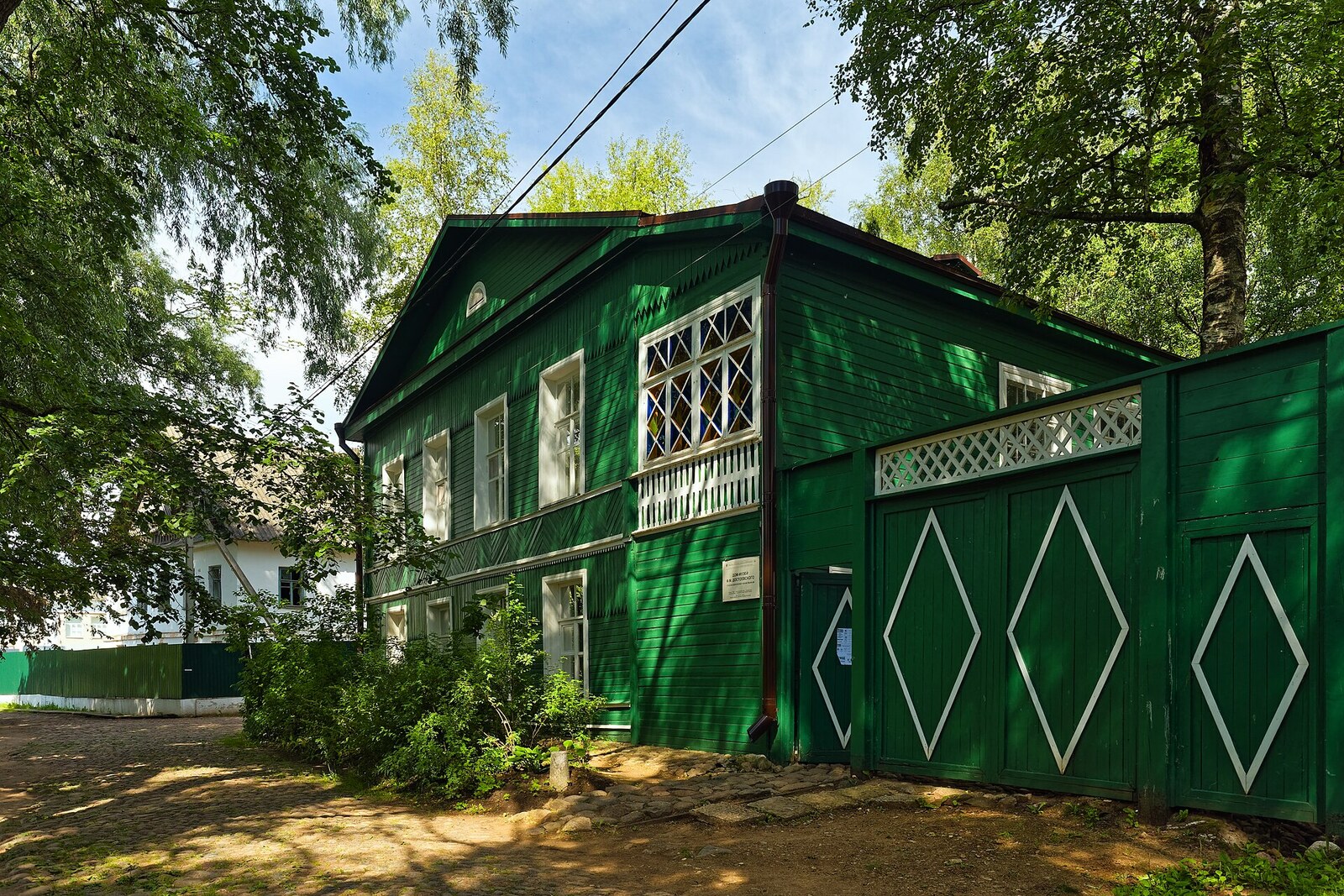
Look around first
What to notice
- Wooden two-story house
- Study reconstructed from a nineteenth-century photograph
- Top hat and kid-leather glove
- Harmonium
The story of the place
The wooden two-story house preserves six rooms on the second floor, one of which is now dedicated to the mistress of the house. The writer’s study had to be reconstructed from an old photograph because the war destroyed almost all the furnishings collected here. The rooms retain authentic family belongings: a top hat, a kid-leather glove, a harmonium, and a table service.
In the summer of eighteen seventy-three, Anna Dostoevskaya, the writer’s wife and manager of the family finances, was the first to arrive here with the children. Doctors advised continuing treatment with Staraya Russa’s salt baths. Fyodor Dostoevsky stayed behind in St Petersburg: he was editing the journal The Citizen, while the family lived on literary earnings and paid off debts.
Anna rented seven rooms on the second floor of the house of retired Lieutenant Colonel Aleksandr Gribbe. The family returned here every summer; their youngest son, Aleksei Dostoevsky, was born here. When Gribbe died, his heiress decided to leave and asked one thousand rubles for the house—together with the furniture and even a supply of firewood. The Dostoevskys did not have that kind of money, and a new owner could have deprived them of their familiar summer house.
Anna asked her brother Ivan Snitkin to act as the buyer. He registered the house in his own name on the condition that his sister would buy it from him when she could. For Dostoevsky, the rented accommodation became “his own nest,” although legally it still belonged to his brother-in-law. The family retained its Staraya Russa way of life, and the writer gained a place to which he could return for several months. Here he wrote most of The Brothers Karamazov, chapters of The Adolescent, issues of A Writer’s Diary, and his speech on Pushkin.
After her husband’s death in eighteen eighty-one, Anna bought the house from her brother in her own name. She continued to come here with the children and would not allow Fyodor Mikhailovich’s study to be altered. Two years later, Anna opened the study and drawing room to visitors—the first Dostoevsky exhibition here.
Most of the collected belongings were lost during the war, so the present study was reconstructed from a nineteenth-century photograph. Among the surviving originals are the writer’s top hat and kid-leather glove, a harmonium, the family table service, and Anna Grigoryevna’s belongings. Of the six rooms on the second floor, one now bears her name: the woman who first found a buyer for someone else’s summer house and then herself turned this house into a museum.
Useful on site
10:00–18:00. Closed on Monday; the last Thursday of the month is a sanitation day. The official estimated visit time is 30 minutes, but 50 minutes have been allotted for the route.
Checked: date not specified. Check the official source before visiting.The interiors were assembled after looting and war damage, using photographs, documents, and recollections. Pay attention to the museum’s explanations distinguishing memorial objects from reconstruction.