 Guide On Map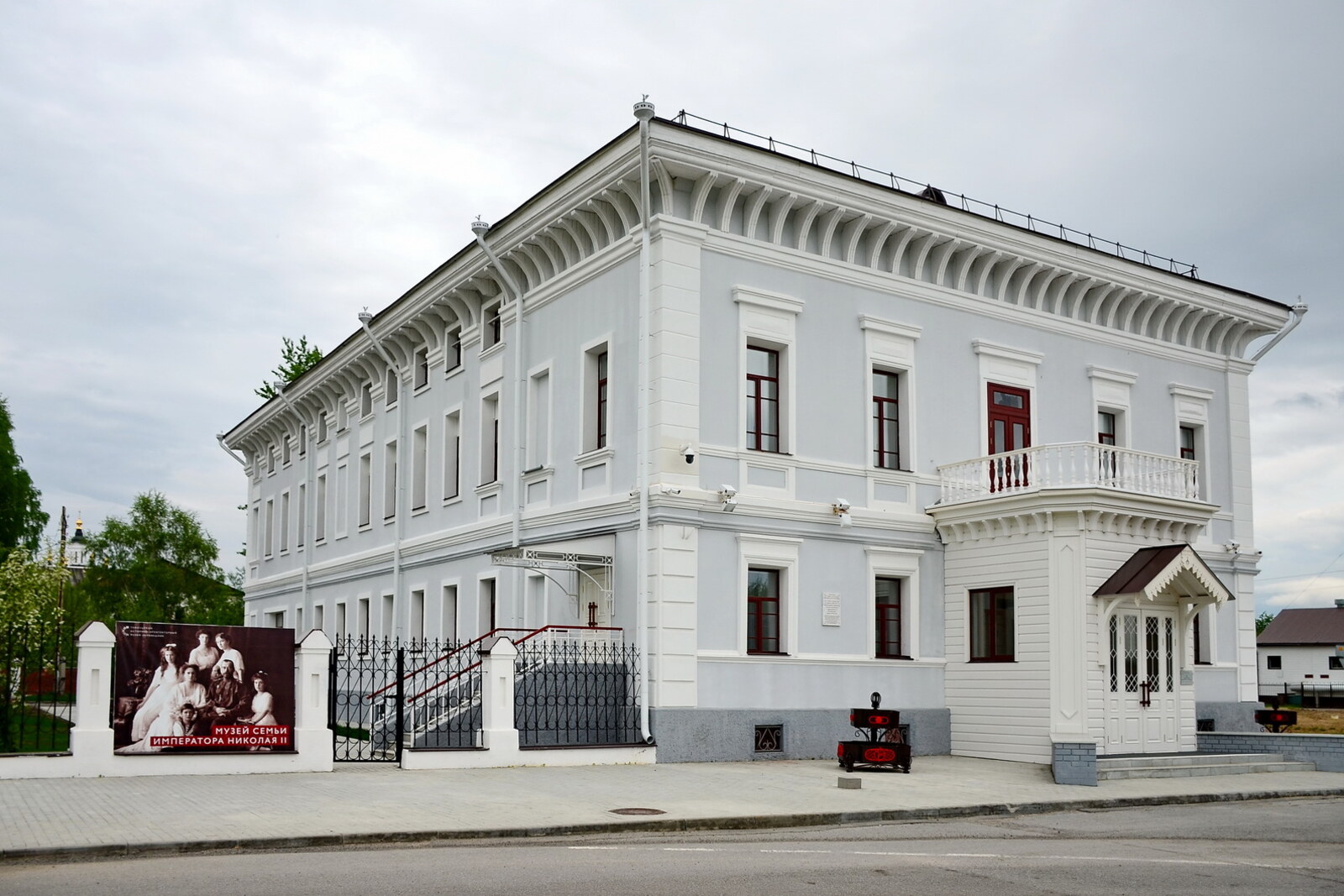
Look around first
What to notice
- Staircase to the second floor
- Surviving sections of parquet flooring
- Stucco moldings and doors
- Recreated study of Nikolai II
The story of the place
Governor's House is named for its former official function. It was built as the mansion of the Tobolsk merchant Ivan Kuklin, but from eighteen twenty-eight onward, the leaders of Western Siberia, and later of the Tobolsk Governorate, lived and worked here. The last governor vacated the residence after the February Revolution, and soon the empty house was needed for a very different resident.
Aleksandr Kerensky, head of the Provisional Government, was deciding where to house the abdicated Emperor Nikolai II and his family. Later, Kerensky explained his choice by Tobolsk's remoteness, its small garrison, and the absence of a railway. He also knew of the comfortable governor's house: the state-owned building made it possible to house the family and post guards around it.
In August nineteen seventeen, the Romanovs arrived in Tobolsk. The house was not ready, so for almost a week they waited for repairs to be completed aboard the steamer Rus. The family was then housed on the second floor, the yard was enclosed by a high fence, and their accompanying staff were settled in neighboring buildings. The prisoners were forbidden to go into town; occasionally, they were taken under guard to the nearest church.
The denouement of the Tobolsk exile began in these rooms in the spring of nineteen eighteen. Commissioner Vasily Yakovlev arrived from Moscow, tasked with taking the former emperor away. But Nikolai's fourteen-year-old son Aleksei lay ill with a severe hemorrhage. The boy had hemophilia: with this disease, even a slight bruise could cause bleeding that the body could not stop. Aleksei's legs were swollen, and he could not walk.
Yakovlev examined the patient, then announced to Nikolai that he would take him away alone. Nikolai was not allowed to refuse; the commissioner warned that he would use force if necessary. Aleksandra Fyodorovna had to choose between her husband, who was being taken away to an unknown destination, and her sick son. She decided to go with Nikolai, fearing that without her he would be in even greater danger. Their daughter Maria went with them. Her three sisters remained to care for Aleksei and run the household.
On the night of April twenty-sixth, the parents and Maria said goodbye to the children at the boy's bedside. Peasant tarantasses were brought into the yard; a mattress was placed in the bottom of one of them for Aleksandra. Nikolai was seated beside Yakovlev, and Aleksandra with Maria. From this yard, they were taken along the spring road to Tyumen, then by train to Yekaterinburg.
The remaining children were brought to Yekaterinburg on May twenty-third. Aleksei still could not walk and was carried in people's arms. The family was together again in Ipatiev House, where they were killed on the night of July seventeenth.
The Museum of Nikolai II's Family is now open in Governor's House. Visitors go up to the same second floor. During the restoration of thirteen rooms, surviving elements of parquet flooring, staircases, stucco moldings, and doors were used; among the recreated rooms is Nikolai II's study. The final departure from this house began beyond its wall, at the bedside of the son whom his parents were forced to leave.
Useful on site
Tuesday–Sunday 10:00–19:00, closed Monday; general-category ticket 300 rubles, ticket office until 18:30.
Checked: June 24, 2026. Check the official source before visiting.The exhibition inside gives the story an everyday scale, but plan your visit to it separately. From outside, do not try to look through the closed sections of the fence.