 Guide On Map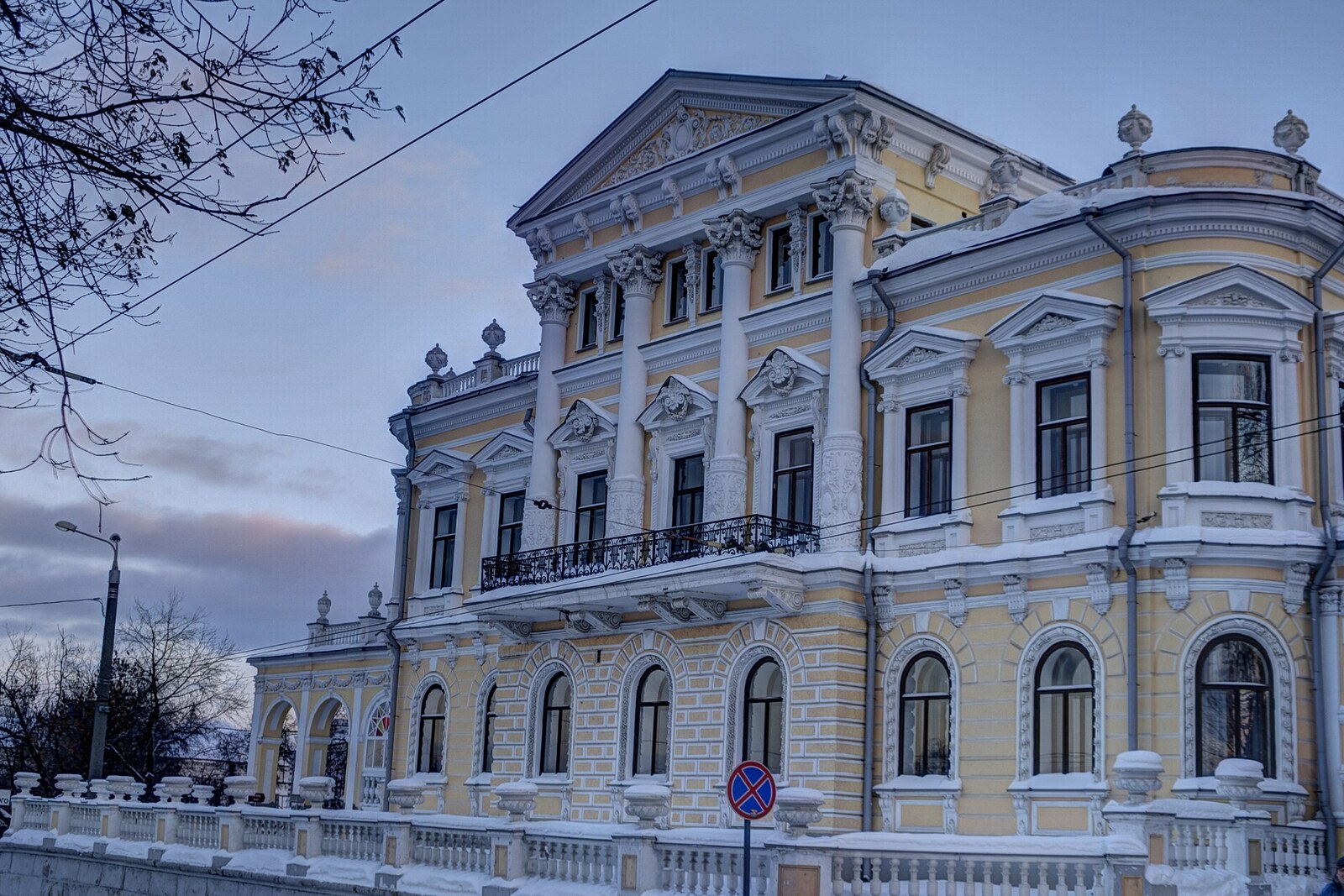
Look around first
What to notice
- Stucco facade
- Second-floor windows
The story of the place
Today, in these halls, the Perm Museum of Local Lore presents the history of the region from ancient settlements to the end of the twentieth century. The mansion itself was arranged for business: the owner's family lived downstairs, while the second floor was occupied by the steamship company's office. The stucco facade and the upper-floor windows remain its visible features. Since two thousand nine, the former owner's personal belongings have been displayed here, and the lecture hall brings people together for open conversations about the history of Russia and the Perm Governorate.
Behind the stucco facade is the main building of the Perm Museum of Local Lore. Here, the history of the region is traced from ancient settlements to the end of the twentieth century. The house was named after Nikolai Meshkov, the owner of cargo steamships and barges, who bought from the city a mansion that had stood empty for forty years after a fire and restored it by eighteen eighty-nine. Meshkov lived downstairs with his family, while the upper floor was occupied by his company's office.
In the summer of nineteen oh one, former rural schoolteacher Pavel Matveev came here. He drew other teachers into illegal meetings where political changes were discussed. In the Russian Empire, such a conversation could become evidence in a case involving a secret society. At Meshkov House, the participants read a paper that investigators later called “criminal in content,” and began debating it.
Meshkov provided his own house for the meeting. Wealth did not protect the owner from the consequences: in March of nineteen oh two, gendarmes arrested both Matveev and the millionaire steamship owner. The charge against Matveev specifically cited his participation in the debates at Meshkov House. The owner was released on bail of ten thousand rubles. The others spent varying terms in prison, and some were exiled from the Perm Governorate; those held the longest went on hunger strike and were released only in August.
Since two thousand nine, Nikolai Meshkov's personal belongings have been displayed in the museum exhibition. In the house where the reading of a political paper once became part of a criminal case, a lecture hall now hosts open lectures and discussions on the history of Russia and the Perm Governorate.
Useful on site
Usually Tuesday—Sunday 10:00—19:00, ticket office until 18:00; Monday closed.
Checked: June 24, 2026. Check the official source before visiting.The house operates as a museum, so a full visit will require additional time. If you do not go inside, pause by the facade and see how close this business house stood to the river route.